

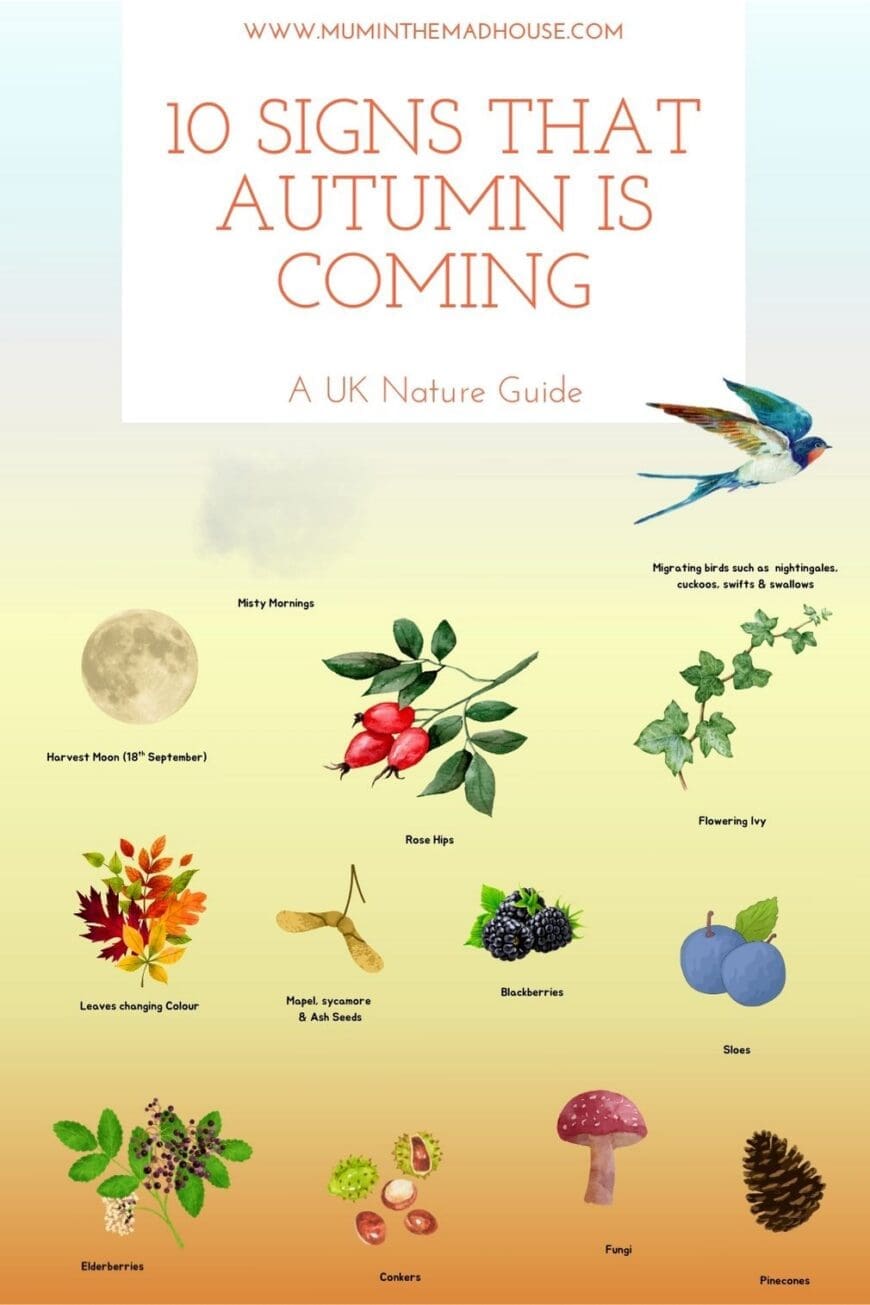
As summer draws to a close, nature provides plenty of clues that the seasons are changing. Cooler mornings, ripening fruits and the first autumn colours remind us that early autumn has arrived. Use this post – and the Signs of Early Autumn infographic below – to help your family spot these signals on your next walk.
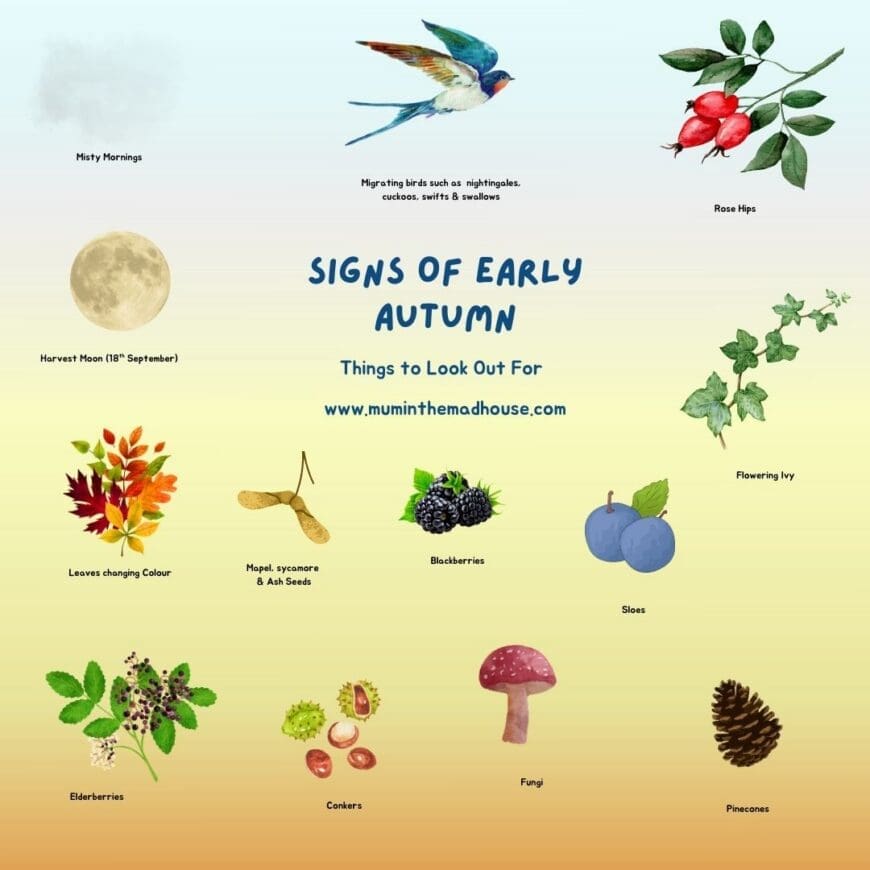
Misty mornings
One of the first hints that autumn is on its way is mist hanging over fields and valleys at dawn. Warm daytime air gathers moisture. When the temperature drops at night, the air can no longer hold that moisture and condenses it near the ground. The result is a veil of mist at sunrise. These misty mornings are perfect for noticing dew‑laden spider webs and listening to robins singing from hedgerows.
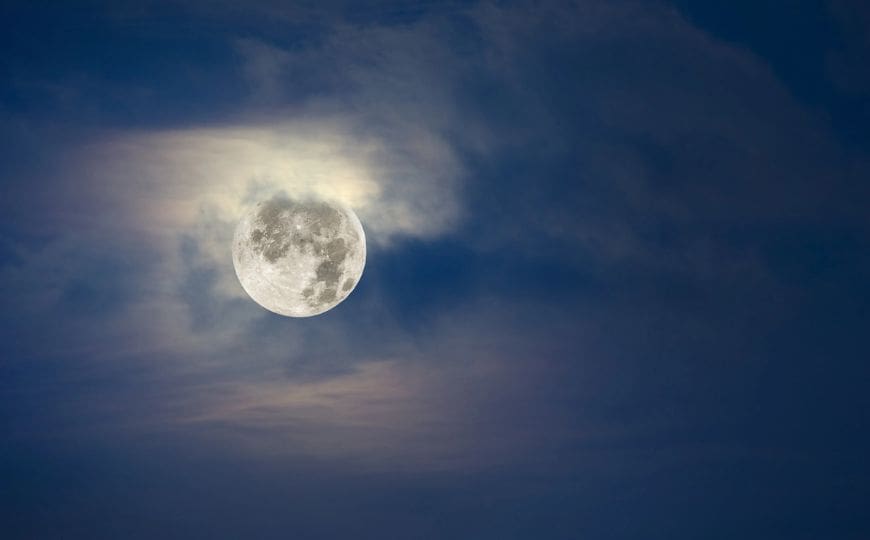
The Harvest Moon
The full moon closest to the September equinox is traditionally called the “Harvest Moon”. This moon rises at around sunset for several evenings in a row, leaving little darkness between dusk and moonrise. The extra light historically allowed farmers to gather crops late into the evening. Contrary to what you may have seen on some calendars, the Harvest Moon does not always occur in September. It can fall as early as two weeks before the equinox or as late as two weeks after. In 2025, for example, the Harvest Moon occurs on 5–6 October, whilst in 2024 it fell on 18 September.
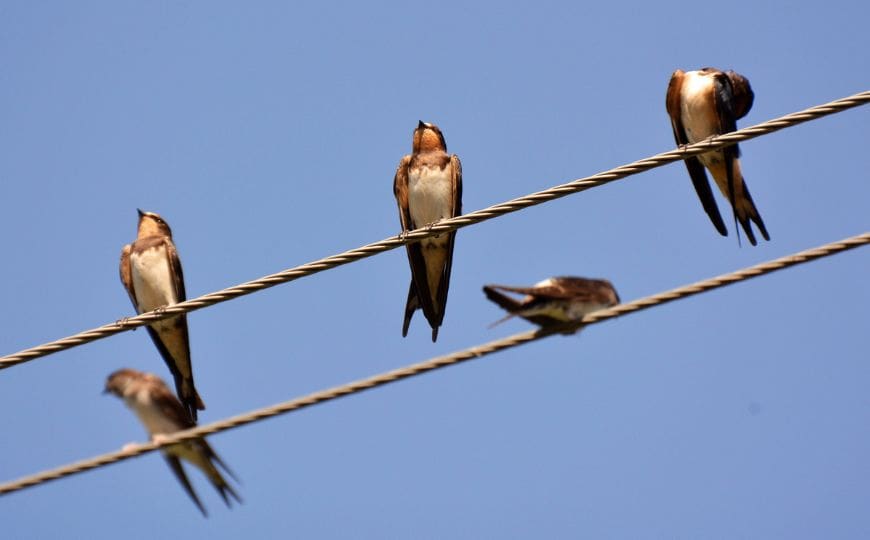
Migrating birds on the move
As the days shorten, many summer visitors leave Britain for warmer climates. Swifts begin their 6 000‑mile return flight to Africa as early as July and are usually gone by September. Nightingales depart from July to September, while adult cuckoos leave as early as June; young cuckoos follow once they are fully fledged. Swallows and house martins linger a little longer; they often gather in large flocks on telephone wires in September and October before heading to southern Africa . As these travellers depart, winter visitors such as redwings and fieldfares arrive from Iceland and Scandinavia.
Leaves change colour
Shorter days and cooler nights trigger deciduous trees to shut down food production. Chlorophyll breaks down, revealing yellows, oranges and reds created by carotenoid and anthocyanin pigments that have been there all summer. Look up into the canopy and you will start to see hints of gold and bronze on birches and beeches. As September progresses, entire woodlands blush with colour.

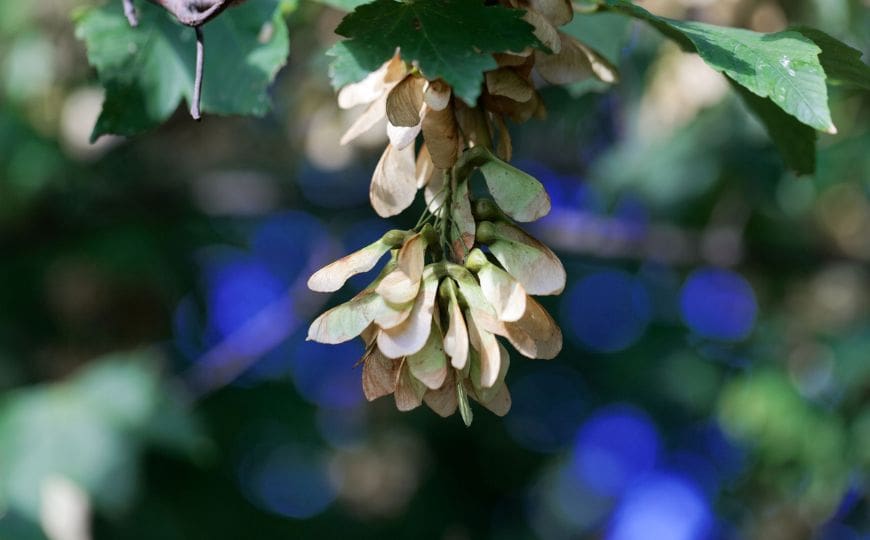
Helicopter seeds and spinning samaras
Many trees disperse their seeds using papery “wings” that catch the wind. Sycamore seeds form a distinct V‑shape and turn brown before spinning to the ground in autumn. Field maple seeds grow in pairs almost horizontally and can be found on the forest floor from late autumn. Ash seeds are single‑winged and hang in bunches; they ripen in autumn but often remain on the tree and fall during winter or early spring. Children call these whirligigs or spinning jennies and love to throw them into the air to watch them twirl. The seeds provide valuable food for small mammals and birds like bullfinches.
Hedgerow fruit and foraging
Late August to early September is prime blackberry season. These dark, juicy fruits are followed by a parade of hedgerow treats. Elderberries ripen from late summer into early autumn; they are rich in vitamin C and can be used to make syrups and jams. Rose hips develop at the end of summer or beginning of autumn and often persist on the plant well into winter. Traditional lore tells us to pick sloes (wild plums used to make sloe gin) after the first frost, but modern foragers often harvest the ripe dark‑purple berries earlier and freeze them to mimic frost. Remember to leave plenty of fruit for wildlife – birds, foxes and badgers depend on these energy‑rich snacks.
Flowering ivy and fungi
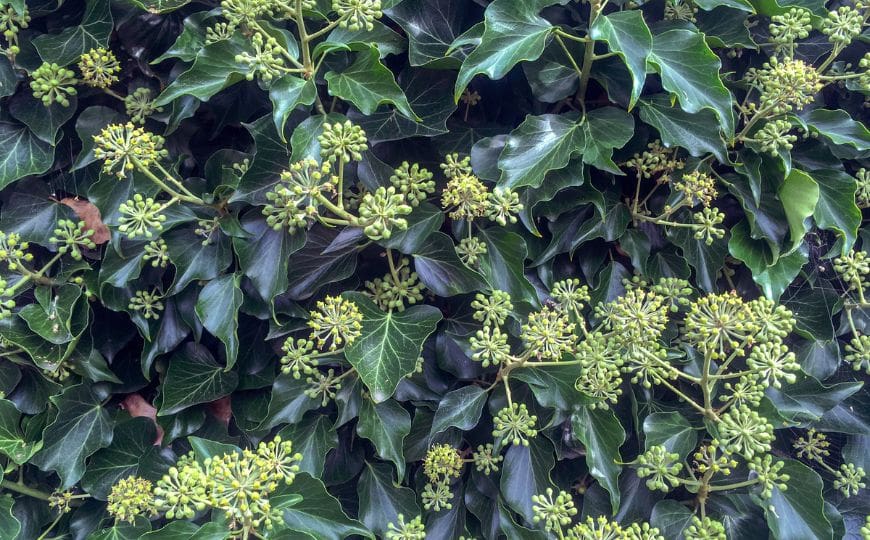
Ivy is one of the few plants to flower in autumn. Its clusters of yellow‑green blossoms appear from September onwards and provide a vital late nectar source for bees, butterflies and hoverflies. Damp conditions also encourage a diverse range of fungi. From fairy‑ring mushrooms to red‑and‑white fly agarics, autumn’s fungi come in every shape and colour. While they are fascinating to observe, many species are poisonous, so admire them in situ rather than picking them.
Conkers and pinecones
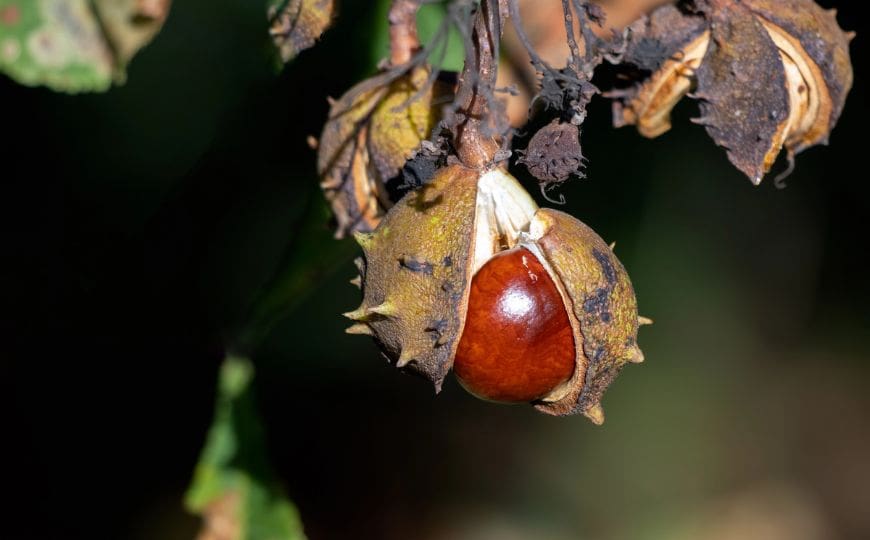
Horse chestnut trees (also known as conker trees) produce prickly green cases that split open in September or October to reveal shiny brown seeds – the conkers. These conkers make a quintessential autumn game for children. Pine trees drop their cones in autumn too. The cone’s woody scales protect the seeds until warm, dry conditions allow them to open. Once mature, the cones fall to the ground, providing food for animals such as pine martens, squirrels and crossbills.
Enjoying the shift into autumn
Early autumn is a magical time to be outdoors. The air feels fresher, wildlife is busy preparing for winter and the landscape glows with warm colours. Use the signs above to make your next walk more engaging. Whether you’re spotting migrating swallows lined up on telephone wires, collecting helicopter seeds, or enjoying the scent of damp earth and fallen leaves, you’ll deepen your connection with the natural world. And don’t forget to look out for the Harvest Moon – its soft light reminds us of our ancestors’ reliance on the rhythms of the sky and marks the start of the season ahead.
For more family‑friendly autumn ideas, explore our blog posts: 50 Autumn Activities for Kids and September Could‑Do List: Family Activities. These articles are packed with crafts, activities and gentle routines to help your family embrace the season.