

Look out the back window. That empty plot of grass holds so much potential. It probably looks like a massive chore right now. A whole yard feels overwhelming to plan. You want a beautiful adult space. You also want a place for wild kids. The combination of those two ideas takes a bit of work. You absolutely can do it yourself. A family garden is entirely within your reach.
A visual map is the best approach. Paper mistakes cost nothing. Concrete mistakes cost a lot of money. Grab a piece of paper. Sketch the yard boundaries. Even better, you can use 3D landscape design to see the exact layout. This tool helps with scale. You get a clear picture. Do this before you buy a single plant. You will see clashes immediately. A proper layout saves time. It saves money too.
Map Out Your Space First
Start with the absolute basics. Map out the permanent features. Note the sun position at noon. Find the shady spots. Look for wet areas after heavy rain. Now, divide the yard into zones. You need a calm space for adult rest. You need a wild space for the kids. You need clear paths between them. A good zone layout is the secret to a great yard. Keep the quiet zones separate from the loud zones. Put the dining table far away from the football goal.
Let us focus on the kids. Location is everything. Put this active area in plain sight. A kitchen window view is absolutely perfect. You can wash dishes and watch the fun. Keep this spot away from delicate flower beds. Balls will fly. Toys will drop. Give the kids a designated safe zone. They need room to be loud. They need room to be messy.
Secure the Boundaries
Safety starts at the edges. Boundaries keep the children secure. Check the garden fences first. Repair any broken panels immediately. Fix the loose gate latches. A high fence provides privacy. It stops balls from a street escape. You can plant climbers against bare walls. Honeysuckle softens the harsh wooden lines. Ivy covers ugly brickwork fast. A secure perimeter brings peace of mind. You can sit on the patio. The kids can roam free.
Keep Play Surfaces Simple and Safe
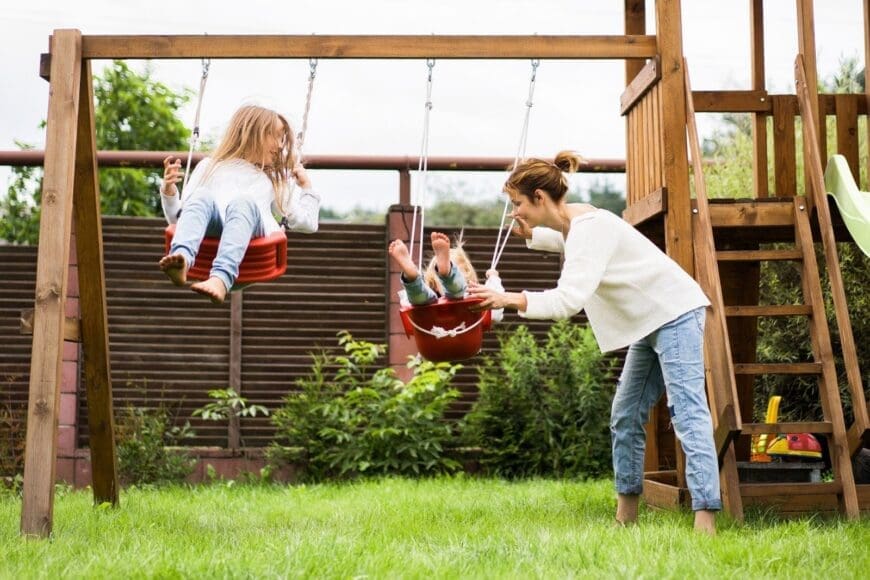
Kids do not need complicated setups. A simple swing set works wonders, especially if you choose one that can grow with your family. If you have older children, investing in a durable swing set for big kids gives them more room to stay active while making your backyard a space they’ll continue to enjoy for years. A sandbox provides hours of entertainment for younger kids. Think about the ground surface under these play areas. Safety matters most here. Grass turns into mud very fast under a swing. Wood mulch is a great choice. Rubber mats also work well. They cushion falls. They prevent scraped knees. Bark chips look natural and absorb impact. Choose a budget-friendly surface. Provide a soft cushion for little feet.
Summer sun gets very hot. Children need cool spots during the day. Plan for shade early in the process. A large tree is the ultimate sunshade. A mature oak or maple is perfect. You might only have a small sapling right now. Put up a canvas sail shade in the meantime. Secure it to sturdy posts. A large patio umbrella works well too. Shade allows for longer play hours. The plastic slide stays cool under a canopy. Hot plastic burns bare legs.
Create Room for Imagination and Action
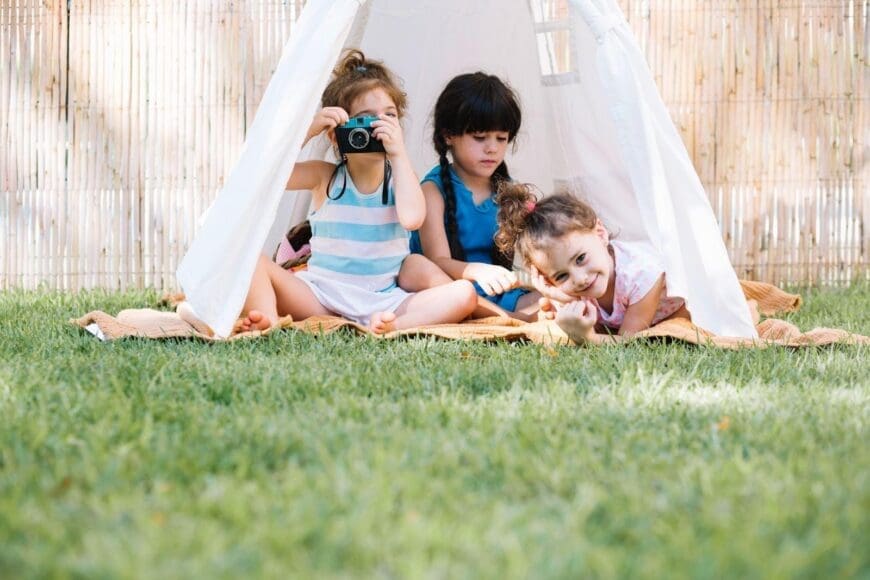
Children love secret spaces. A simple willow teepee feels magical. A small dirt patch just for playtime is brilliant. Kids need room for imagination. A fancy plastic playhouse is nice. A pile of safe logs is sometimes better. Give them loose elements. They can move these items around. Loose parts inspire creativity. Old wooden planks become castles. Smooth stones become bridges. A small tent in the corner turns into a hidden fortress.
You need paths. Kids run everywhere. They will wear tracks right into the lawn. Give them a clear route. Flat stones are fun for jumps. Gravel paths sound great. The stones often end up inside the house. Bark paths are soft and cheap. Stone slabs offer a smooth ride for scooters. Paths need sufficient width. A tricycle or a toy wagon must fit. Solid borders keep the path materials in place. They stop the mulch from escaping into the grass.
Pick Tough and Safe Plants
Plants make the garden come alive. Care is necessary with children around. Skip the thorny bushes. Roses are beautiful but cause tears. Avoid poisonous leaves or berries. Foxgloves and oleander are highly toxic. Choose sturdy plants instead. Stray footballs will hit the bushes. You need tough shrubs. They will bounce back easily. Ornamental grasses are strong. They look great. They sway in the wind and add movement.
Pick sensory plants. Lambs ear is incredibly soft to touch. Lavender smells wonderful. Sunflowers grow unbelievably fast. Kids love their rapid growth. Cherry tomatoes are fun to pick. Kids can eat them straight from the vine. Plant a few strawberries in a pot. Sugar snap peas are another great choice. These little additions make the yard exciting. A small vegetable patch offers nature lessons.
Think Small with Water Features
Water adds a calm sound to a yard. A deep pond is very dangerous for toddlers. Skip the deep fish pond for now. Choose a bubble fountain instead. Water trickles over a large stone. The water disappears into a hidden reservoir. The kids can touch the wet stone safely. There is no deep water. Birds will still come for a drink. You get the calm sound without the daily worry.
Add Decor and Hide the Toys
Now for the final touches. Decorative elements tie everything together. Add some fairy lights in the trees. They make the garden look magical at dusk. Solar lanterns are safe and easy to install. Put a comfortable bench near the play area. Adults need a place to sit. Paint a few large rocks. They can look like ladybugs. Hang a wind chime from a sturdy branch. Keep the decor simple and playful. A colorful birdhouse attracts wildlife.
Do not forget about toy storage. Yard toys multiply overnight. A wooden deck box hides footballs and plastic buckets. It also doubles as an extra seat. Good storage keeps the garden neat. The yard stays tidy. You can build a simple wooden crate. You can buy a waterproof chest. Make sure the kids can open it easily. They must be able to close it safely too.
Let the Yard Grow With Your Family
Gardens change over time. The sandbox will eventually disappear. A fire pit can replace it later. The swing set area might turn into a vegetable patch. Plan for the future. Keep permanent structures flexible. Do not pour concrete hastily. Shrubs will grow. Trees will cast more shade. Keep the design adaptable. This takes the pressure off. Perfection is unnecessary on the very first try.
A family garden is a long process. The plants take time to mature. Start with a solid plan. Focus on the playful elements first. Choose tough plants. Add the pretty details later. The goal is a happy space. You want a place for adult rest. You want a safe place for the kids. Enjoy the journey. Your family will make wonderful memories out there.
