

Getting kids and teens away from screens does not always require a big plan. Sometimes, a short bike ride is enough. It gives them a route, a destination, physical movement, and plenty of real-world details to notice. Instead of simply saying, “Put the phone down,” a bike ride naturally shifts their attention back to the world around them.
A screen-free bike adventure does not have to be long, intense, or formal. It can be a ride from home to a nearby park, a loop around the neighborhood, a trip to the library, or a slow ride along a greenway. What matters most is that kids get to take part: reading the route, spotting landmarks, choosing rest stops, and turning the ride into a drawing, story, or craft activity afterward.
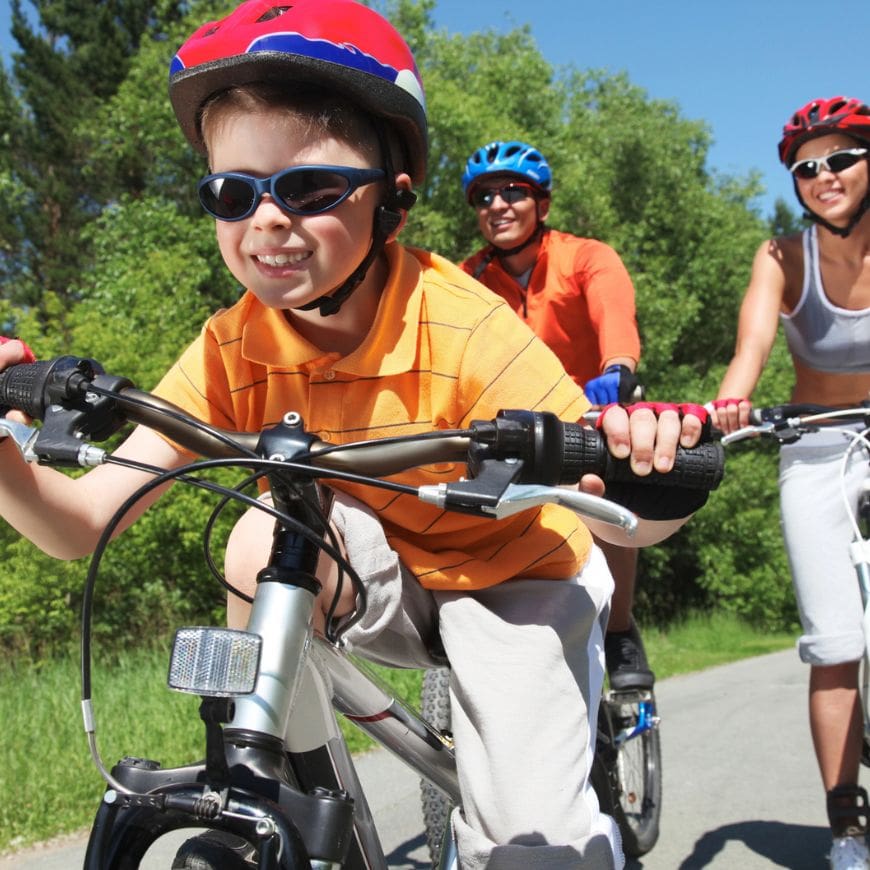
For parents, the best part is that this kind of activity has a low barrier to entry. With the right route, a relaxed pace, and a few simple supplies, an ordinary ride can become outdoor time that feels fun, doable, and easy to repeat.
Why Biking Works Well as a Screen-Free Activity
Many screen-free activities can feel like assignments. The moment kids hear, “Let’s do an activity,” they may already expect to be bored. A bike ride feels different. It has movement, a destination, and a little bit of freedom built in.
While riding, kids and teens naturally pay attention to their surroundings. They notice intersections, shady spots, windy stretches, places to slow down, and areas that might be worth stopping at next time. Those details pull their focus away from screens without turning the moment into a lecture.
Biking also works across ages. Younger kids can focus on observation games, colors, sounds, and landmarks. Teens may care more about the route, the pace, the destination, and the feeling of independence. As long as the ride does not feel like a training session, a short bike outing can become an easy family outdoor activity.
Just as important, kids do not have to be cheerful every minute for the activity to count. Sometimes they may simply ride quietly, stop for water, look around, and take in the day. That is still meaningful screen-free time.
Start With a Route That Does Not Feel Rushed
A good ride usually starts with the route, not the destination. If the route is too long, too traffic-heavy, or full of tricky intersections, the whole outing can start to feel stressful. For kids and teens, the best routes are usually familiar, clear, and easy to manage.
Good starter routes might include:
- A short neighborhood loop
- A ride from home to a nearby park
- A quiet route near school
- A greenway, riverside path, or lakeside path
- Streets with clear sidewalks or bike lanes
- A short route with places to stop and rest
There is no need to focus on distance at first. Kids are more likely to remember the experience than the mileage: the tree they liked, the bench where they took a break, the quiet street, or the spot they want to visit again.
If kids are old enough to help make decisions, let them take part in choosing the route. Open a map and ask questions such as:
- Which route looks shorter?
- Which route has fewer intersections?
- Where could we stop for a break?
- Which part might need a slower pace?
- How could we avoid the busiest road?
This does more than plan the ride. It helps kids understand that getting somewhere is not just about choosing the shortest path. Safety, familiarity, energy, and pace all matter too.
Add a Small Mission to the Ride
Some kids may not get excited by the idea of “just going for a ride.” Adding a small mission can make the outing feel more like a relaxed adventure.
The mission does not need to be complicated. Try ideas like:
- Find five different colored doors
- Record three clear landmarks
- Find the quietest street
- Notice which part of the route feels coolest
- Count how many stop signs you pass
- Find an interesting leaf
- Remember the turns from home to the park
- Draw your own route map afterward
These small tasks encourage active observation. Younger kids may focus on colors, sounds, plants, and buildings. Teens may prefer route efficiency, rest spots, terrain changes, or photo-worthy details.
You can also make the ride feel more like a game. Before leaving, give each person an observation job. One person watches for trees, another looks for signs, another remembers the route, and another notices places that would make good stops next time. When you get home, talk through what everyone found.
That turns the ride into more than movement. It gives the outing a story.
Pack Simply: Water, Snacks, Helmets, and the Basics
A relaxed ride does not need much gear, but the basics matter. When kids or teens are coming along, a small missed item can quickly turn a fun outing into a frustrating one.
A simple ride bag might include:
- Water bottles
- Small snacks
- Helmets
- Tissues or wipes
- A few bandages
- A phone or emergency contact information
- A small lock
- A weather-appropriate layer
- A compact pump or basic tool if the route is longer
Helmets should not be optional. If kids care about how they look, let them help choose the color or style, but keep the rule itself clear. The more casual the ride feels, the more consistent the basic safety habits should be.
If parents are comparing different ways to ride, this can also be a good time to talk about the difference between a regular bicycle and an electric bicycle. A regular bike depends more on physical effort, while an electric bike requires extra attention to speed control, braking distance, and starting smoothly. No matter what kind of bike is being used, route choice and riding rules should come first.
The conversation does not need to feel like a lecture. When it connects to a real route, kids are more likely to understand why some streets are better for riding, why certain areas require a slower pace, and why stopping to look carefully matters.
Match the Pace to the Surface
One thing kids and teens often overlook is how much the riding surface changes the experience. A smooth street, park path, gravel stretch, hill, damp surface, or tree-rooted sidewalk can all require a different pace.
During the ride, parents can help kids notice things like:
- Which section is the smoothest?
- Where should riders slow down early?
- Where are there leaves, gravel, or small stones?
- Which intersection has poor visibility?
- Where can people ride side by side, and where should they ride single file?
- Would this route feel different after rain?
This helps kids build judgment. Instead of thinking only about going faster, they begin asking, “How should I ride this section?”
If the route includes park paths, uneven ground, or a longer ride where an adult is riding alongside kids, parents may also look into a fat tire electric bike. The point is not to make the outing more extreme. On certain surfaces, wider tires can make the ride feel steadier and more controlled. For family rides, stability and control usually matter more than speed.
Still, no bike replaces good judgment. If the surface is too rough, visibility is poor, or an area is crowded, the best choice is to slow down, stop, or choose a better route.
Turn the Ride Into an Activity After You Get Home
A screen-free bike adventure does not have to end when the ride is over. Some of the best parts can happen afterward.
Kids can draw the route and mark the starting point, destination, turns, favorite spots, and places to be careful. Younger kids can keep the map simple. Teens can make it more like a route log, adding time, distance, rest stops, and ideas for improving the next ride.
You can also turn the ride into follow-up activities such as:
- Write a few sentences about the best part of the ride
- Draw a plant, building, or sign you noticed
- Make a next ride wish list
- Put the route on a family activity board
- Create a new observation challenge
- Record how much screen-free time the ride created
- Plan a quieter or more interesting route for next time
If your family enjoys crafts or printables, the ride can lead into those too. Kids can make leaf rubbings, route stickers, their own biking badge, or a summer outdoor activity jar with ideas like biking, walking, nature spotting, picnics, and simple outdoor games.
That way, the ride becomes more than one outing. It becomes a repeatable routine. Kids are more likely to look forward to the next one when they feel like they are helping shape the adventure.
Final Thoughts
A good screen-free bike adventure does not need to be expensive or complicated. Choose a manageable route, bring the basics, give kids a small mission, keep the pace relaxed, and turn the ride into a drawing, writing, or craft activity afterward.
For kids and teens, biking offers movement, route awareness, observation, and a bit of independence. For parents, it is a simple, low-pressure way to spend active time together outdoors.
Life away from screens does not always need a major reset. Sometimes it starts with a bike, a familiar path, a simple challenge, and enough time to enjoy the ride.