

When the heating goes on and the air at home starts feeling dry, a humidifier can make rooms more comfortable by adding moisture. But choosing between evaporative and ultrasonic models isn’t simply about size or noise. Both increase humidity, yet they do it in different ways, and that affects cleaning, noise, water use and ongoing costs. Here’s how to work out which type makes sense for your family and your home, without adding unnecessary work to your routine.
How Does an Evaporative Humidifier Work?
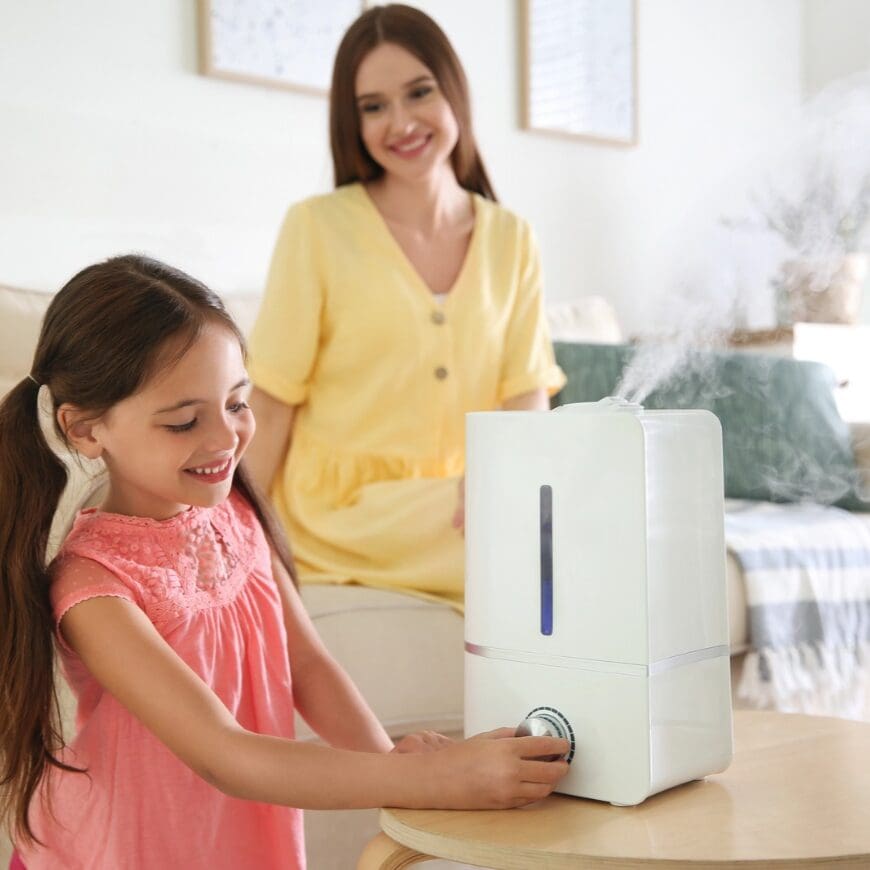
An evaporative humidifier uses a simple combination of water, an absorbent wick and a fan. Water from the tank soaks into the wick, and the fan moves room air through the damp material. As air passes through, water evaporates and returns to the room as invisible water vapour.
As room humidity rises, evaporation naturally slows. That doesn’t replace checking room humidity, particularly if the humidifier is running for long periods.
Minerals from the water tend to remain in the wick rather than travelling into the room. Over time, those deposits can restrict water absorption, so most wick-based models need periodic filter replacement as well as routine tank cleaning.
How Does an Ultrasonic Humidifier Work?
An ultrasonic humidifier uses high-frequency vibrations to break water into tiny droplets, which are released as a fine mist. It doesn’t rely on air passing through a wet wick, although some models use a small fan to move the mist into the room. Many ultrasonic units operate quietly, but noise varies by model.
The important distinction is that these droplets can carry dissolved minerals from the tank. With mineral-rich tap water, the droplets may leave a pale, powdery residue known as white dust on nearby surfaces. Ultrasonic units don’t generally use evaporative wick filters, but some have separate demineralisation cartridges.
Ultrasonic mist can also carry microorganisms from contaminated tank water into the air. Regular water changes and thorough cleaning are therefore important, even when you use low-mineral water.
Evaporative vs. Ultrasonic Humidifiers: Key Differences
| Feature | Evaporative humidifier | Ultrasonic humidifier |
| Moisture output | Invisible evaporation | Fine water mist |
| Noise | Audible fan, depending on speed | Usually quieter |
| White dust | Generally little airborne mineral dust | Possible with mineral-rich water |
| Maintenance | Clean tank; replace wick | Clean tank; remove scale |
| Ongoing costs | Electricity and replacement wicks | Electricity; possibly distilled water or cartridges |
| Humidity output | Naturally slows as humidity rises | Largely depends on settings and controls |
Noise and Bedroom Comfort
If you’re choosing the best humidifier for a bedroom, think about the sound it makes overnight. An ultrasonic model may suit light sleepers because many models operate more quietly than fan-driven evaporative units. An evaporative humidifier can be more noticeable on a high setting, although some families find its steady background sound unobtrusive. Check noise information for the specific model rather than assuming every unit of one type sounds the same.
White Dust and Water Quality
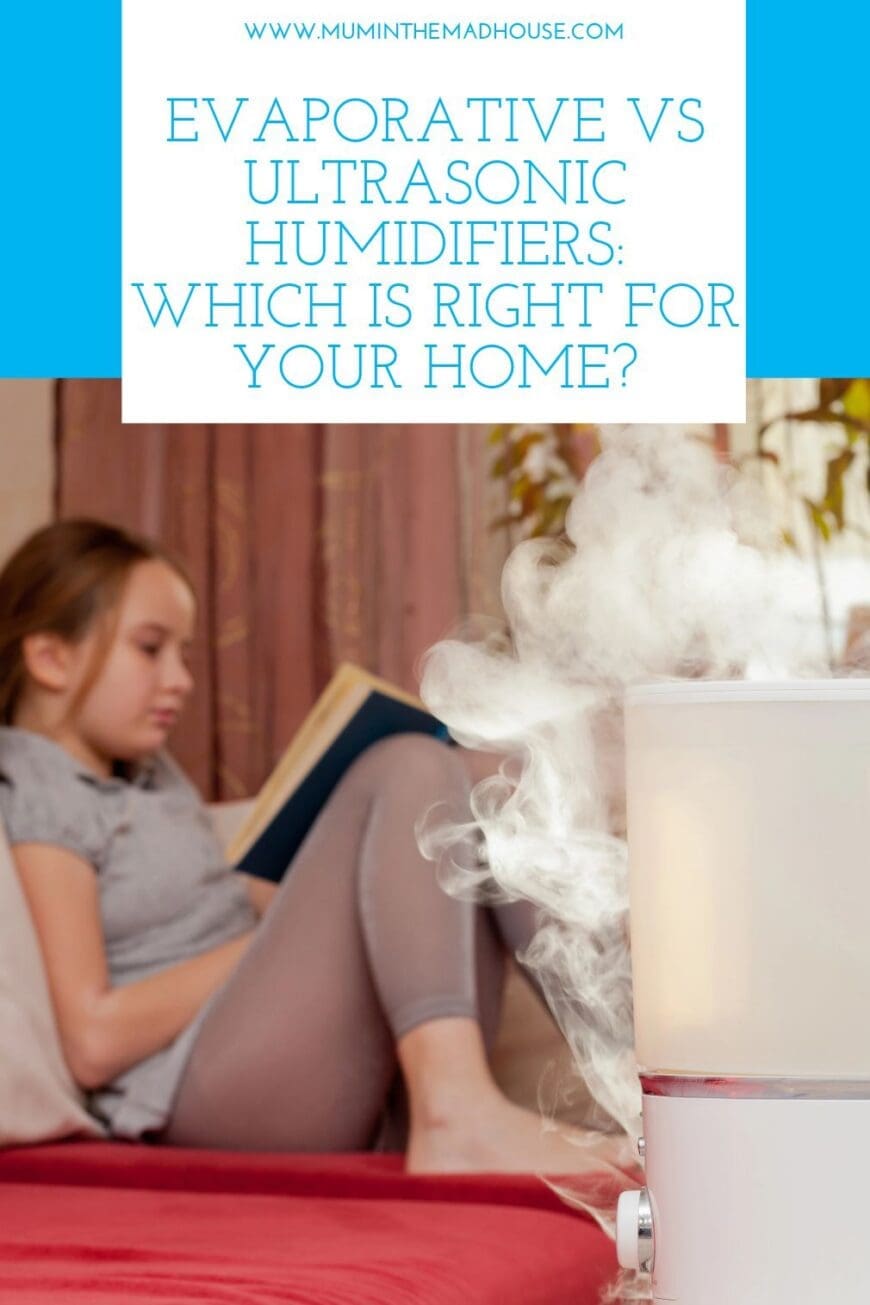
White dust is mainly a concern with ultrasonic humidifiers using water that contains dissolved minerals. Hard water can also cause limescale inside either type of machine. Distilled or demineralised water can reduce mineral emissions from an ultrasonic model, while an evaporative wick tends to hold back minerals that would otherwise enter the air. Neither approach removes the need for cleaning.
Humidity Control and Room Coverage
Neither design is automatically better for every room. A small bedside unit may struggle in an open-plan living space, whatever technology it uses. Compare the manufacturer’s recommended room coverage and moisture output. A built-in humidistat can help regulate operation, while a separate hygrometer lets you check the actual relative humidity where your family spends time.
Cleaning and Maintenance: Filters vs. Regular Descaling
Both types need attention. Standing water can encourage microbial growth, while scale makes cleaning harder. Their main maintenance requirements differ. If water develops an unusual smell or the tank feels slippery, stop using the machine until you’ve cleaned it thoroughly.
When Should You Replace an Evaporative Humidifier Wick?
An evaporative wick gradually collects minerals as water passes through it. Stiffness, discolouration, clogging or falling moisture output despite a working fan can signal replacement time. The interval varies with water hardness, frequency of use and the manufacturer’s instructions. When replacement is due, choose a compatible humidifier wick filter matched to the appliance’s model number to support proper water absorption and consistent moisture output.
A new wick doesn’t make the rest of the humidifier clean. Empty and dry the tank regularly, check accessible surfaces for deposits and avoid trying to extend the life of a disposable wick beyond the maker’s guidance.
Keeping an Ultrasonic Humidifier Clean
Ultrasonic models need regular emptying and cleaning around the tank and mist-producing components. Remove scale using only the method and products approved in the manual, and rinse thoroughly after cleaning. Some models have small openings or awkward corners, so it’s worth checking how easily you can reach them before buying.
Distilled water reduces scale and white dust but never replaces regular water changes or cleaning.
Which Humidifier Costs Less to Run?
There isn’t one reliable answer for every household. Purchase prices overlap, and electricity use depends on the individual machine, its output setting and how many hours it runs. Many ultrasonic models use little electricity, but comparing rated wattage alone doesn’t tell you how effectively two different units humidify the same room.
An evaporative humidifier brings the recurring cost of replacement wicks. How often you need them depends partly on your local water supply and usage. An ultrasonic model may avoid wick purchases, but regularly using distilled water or replacing a demineralisation cartridge adds expense.
Think about cleaning supplies and convenience too. A machine that’s fiddly to wash can become a nuisance even if its running costs are modest. Compare the purchase price, expected replacement parts and everyday care before deciding which offers better value.
Which Humidifier Is Best for Your Family’s Home?
Start with your room, water supply and daily routine. It’s also worth choosing a tank you can easily refill, carry and wash in your sink.
For Bedrooms and Children’s Rooms
For sleeping spaces, a quiet ultrasonic humidifier may be appealing, especially when even gentle fan noise is distracting. An evaporative unit may suit a family that doesn’t mind background sound and wants to minimise airborne mineral dust.
Place either type beyond children’s reach, away from sockets, cables and bedding. Keep mist off fabrics and check humidity before running it overnight.
For Homes With Hard Water
If your kettle collects limescale, consider water quality. Evaporative humidifiers generally keep more minerals in the wick, reducing the likelihood of white dust in the room. The trade-off is that the wick may clog sooner and need replacing more often.
With an ultrasonic model, using distilled water or a manufacturer-recommended demineralisation cartridge can reduce mineral residue, although cartridges vary in effectiveness.

For Larger Living Spaces
For larger rooms, check floor space against the manufacturer’s coverage guidance. Compare water-tank capacity, how often refilling will be needed and whether the unit has a humidistat. Tank size alone doesn’t guarantee adequate output.
How to Use Either Humidifier Safely at Home
Add only the moisture your room needs. Aim for an indoor relative humidity of roughly 30–50%, and don’t allow it to exceed 50%. Use a hygrometer. If you see condensation on windows or damp patches around the machine, reduce the setting or switch it off.
The US Environmental Protection Agency advises emptying, drying and refilling portable humidifier tanks every day, and cleaning them every third day. Unplug the appliance first, follow the manufacturer’s cleaning instructions and rinse thoroughly after any approved cleaning product.
Keep the machine out of children’s reach and away from electrical hazards. Don’t point visible mist towards bedding, walls or furniture, and replace filters or cartridges when instructed. Clean and dry the unit before storing it away for the season.
Next Steps
An evaporative humidifier is worth considering if reducing airborne mineral dust is your priority and you don’t mind fan noise or replacing wicks. An ultrasonic model may be the better fit if quiet operation matters most and you’re happy to manage water quality and regular descaling.
Before choosing, check room coverage, replacement parts and cleaning instructions. Pick a model you’ll maintain consistently, rather than one with features you’re unlikely to use.