Jen Walshaw | Mum In The Madhouse

2026 Colouring Calendar!

Subscribe and receive our 2026 Kids Colouring Calendar for Free
Get the 13 Page Calendar by subscribing below.

Author name: Jen Walshaw

Mum-in-charge Jen Walshaw runs the UK’s top parenting blog Mum in the Madhouse, and she describes herself as a “fat, feisty and over 50” Northerner. Based in North Yorkshire, she’s mum to young adults and a big believer that family life is messy, creative and fun. In 2009 a double mastectomy gave her the nudge to start blogging; with two boys under three she needed an outlet and a digital scrapbook to capture their chaos.Jen’s posts are a mix of crafts, kid‑friendly recipes and honest parenting, peppered with northern humour. She’s happiest when up to her elbows in tea, fabric and pizza dough – sewing and making homemade gifts – before sneaking off to write about it. As a proud Northerner she warns PRs that a “quick pop down to London” isn’t quick at all. Her blog has earned her a stack of accolades, including the Cision #1 Mummy Blogger title in 2024  and consistently topping Vuelio and Tots100 parenting‑blog charts. Whether she’s advocating for diversity and body neutrality or sharing tales of parenting teens, Jen keeps things chatty, real and refreshingly down‑to‑earth.

A day in the life of my hands

o hands, one for each of my children. I still take joy in the fact that at eight and nearly seven the boys want to hold my hands when we go places.
Two hands, to hold on tight to the man of my dreams
Two hands that love to get dirty with bread, paint, glue and glitter (not all at the same time mind you)
Two hands, one to hold the book and one to turn the pages as I read the bedtime story
Two hands that love to gently stroke my children as they sleep.
Two hands that tippy tap away on the keyboard letting the words flow from brain to blog
Two hands that hold the camera capturing the moments to make the memories
But mostly my two hands help, they help my children learn to make their own way in the world

A day in the life of my hands Read More »

Why loyalty pays

more important to us both.

I am his loyal wife. I trust him with my life and the life of my children and he trusts me too. We work hard at making sure that we remain steadfast together and are not only husband and wife, but friends, companions and more.

So when I was asked to tell you about the fact that E.ON are giving you the chance to reward someone close to you, someone who has been with you through thick and thin, or who has just done something nice for you recently with a treat, I jumped at the chance. E.ON are giving away 4 fabulous experience days for two plus 70 pairs of cinema tickets. I know that MadDad and I would love a pair of cinema tickets at the moment as the last film we saw together was Star Trek and the new one is due out at any time. So why not visit the E.ON Facebook Page before 28 April and let them know who you’d reward and why. You can also find the full terms and conditions of this competition on the E.ON Facebook page.

You see E.ON believes you should get something back for your loyalty and if you’ve been with them for a year or more, they’d like to say thank you. So they are giving rewards to their customers. You can either get money off your bills or Tesco Clubcard points – it’s up to you. All you need to do is change to one of E.ON’s tariffs with rewards.

Why loyalty pays Read More »

Turbo-Boosting Your Child’s UCAS Personal Statement

thinking of the Personal Statement a good deal in advance, and how you might help your child to connect their extra-curricular interests, achievements and hobbies with their academic pathway of choice, you can steal a march on all of the rest of the university applicants.

Karen Martin, from the Admissions & Student Recruitment Department at the University of Dundee, explains: “Remember that your Personal Statement is the only piece of written work we will see when selecting the best applicants.”

Pretty crucial, then.

None of this is of course a direct substitute for quality academic performance but, done well and properly, the Personal Statement is often the deciding factor between so many applications of equal weight.

Outlined at the outset on the Personal Statement, there need to be cast-iron reasons for why your child has chosen that particular subject, that university and why exactly they want to go to continue in Higher Education in general. This is the Personal Statement bread and butter.

But, the essentials aside, what other ingredients can you think about in advance that could help boost your child’s application and save you all a whole world of heartache at a later, more stressful date?

Volunteering

Turbo-Boosting Your Child’s UCAS Personal Statement Read More »

An Ironing Revolution – When Should Kids Learn to Iron?

Normally on a Sunday I do my ironing whilst watching One Born Every Minute on catch up. But alas the series had ended, so I decided to watch Paul Hollywood instead and you know what I managed to get the ironing done in that time. Now those of you in the know, will understand this statement, but for the uninitiated OBEM is an hour long, whereas Paul Hollywood’s Bread is only 30 minutes long. So I managed to halve my ironing time. Which delighted me. OK this week wasn’t the week that I do our bedding, which is super kingsize and yes before you ask I ironing my own bedding because I love getting in to clean laundered and ironed sheets, but still it was a lot faster than usual.

The Tefal Pr Express has lots of positives, you can fill it up at the tap, large water tank, anti calc spoon for hard water areas, safety catch (so you can store the hot iron) and an auto off facility too. I do, however, need to get a new ironing board with somewhere to put the steam generator.

The thing that got me thinking about how old I was when I learned to iron was the fact the iron is a lot lighter than a traditional steam iron as it doesn’t have to have a tank to hold the water.

So when is the right time to teach my boys how to iron? When did you teach your children?

An Ironing Revolution – When Should Kids Learn to Iron? Read More »

House of Secrets

We love books in The Mad House and one of my favorite times of the day is when we read to each other.  As the boys are growing up I still feel it is important to read to them and I am aware that sometimes the length of books is daunting to younger children if they want to read them themselves,

House of Secrets Read More »

Encouraging Writing in Boys

With the onslaught of electronics in todays lifestyle writing can sometimes take a backseat and I for one am keep to encouraging writing in my boys. I think the fact that Maxi is both a reluctant reader and writer makes me more determined to find ways to encourage this skill. Mini who is nearly seven loves to read and write and can often be found with a notebook and pencil in hand and is keen to improve his handwriting as he wants to get awarded a handwriting pen at school.

Over the summer holidays last year we focussed a lot on writing and pen skills including making our own books, creating a writing centre and making memory stones.

One of the things that I discovered was that good quality writing equipment was key in helping both the boys Triangular and wide pencils were easier for them to grip[ and paper with lines on made it easier too. Good quality paper that they can press on without ripping is essential. I also found that providing them with notebooks and letter writing stationery or their own choice helped to encourage them.

Journaling

Now the boys are a little older (eight and nearly seven) we have moved on and they are currently filling in a Q&A a day for children journal each night before bed. These are brilliant journals, which asks a simple question each night and your child completes it. It is only a sentence, so fast and simple to do before bed. I want the boys to get in to the habit of writing and feel this is a fantastic way to do that,m plus a good way of recording how their answers change each year.

Maxi is also putting together a scrapbook style journal of our recent trip to Orlando (more about that in the near future).

Penpals

Both the boys also have a penpal that they write too. This is a great way of encouraging writing, penmanship and also communication skills. They choose their own stationery and learn the joy of sending and receiving letters. We have even been collecting stamps to make a display with. I know that the boys are excited to use the special edition Dr Who Royal Mail stamps (released to celebrate the 50th Anniversary of Doctor Who this year) on their next letters.

Encouraging Writing in Boys Read More »

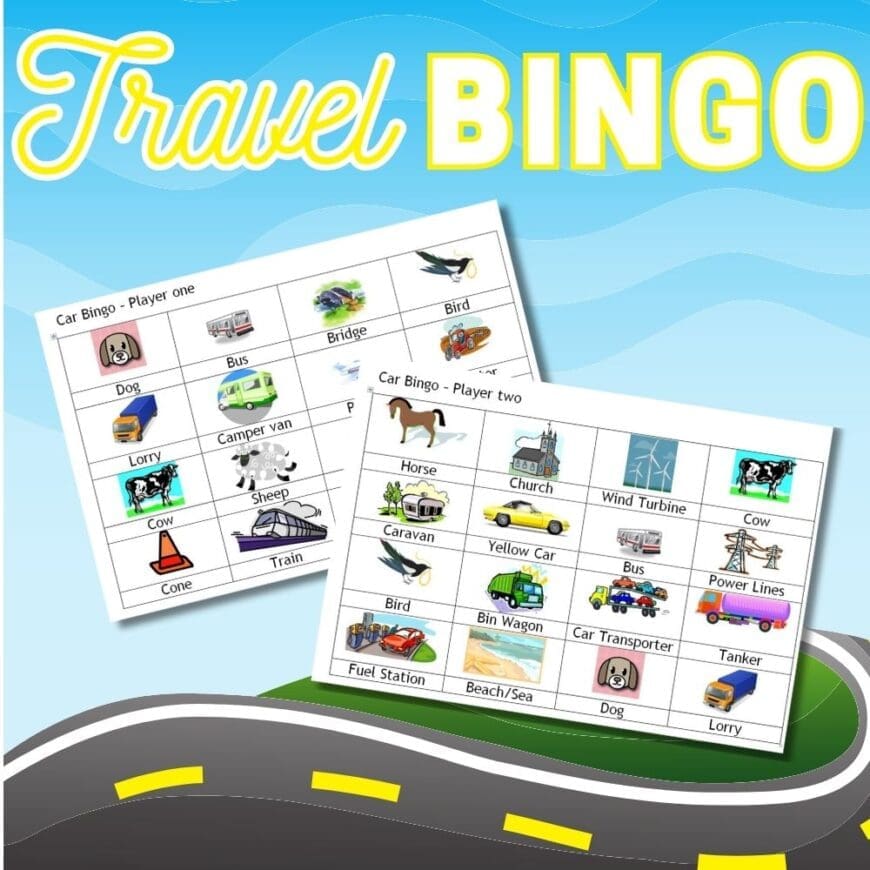
Travel Bingo: A Fun Twist on “I Spy” for Your Next Family Road Trip

These are really easy and simple to use. All you have to do is click on the images below and enlarge them and then print them out in colour. Then laminate them (we have a fab fellow Laminator). I bought a pack of white board pens from the pound shop and the boys use them and wipe them clean with a tissue.

Travel Bingo: A Fun Twist on “I Spy” for Your Next Family Road Trip Read More »

Is it Safe for Your Kids to Take a Gap Year?

Is it Safe for Your Kids to Take a Gap Year?

By Andrew Tipp

It’s not difficult to find news stories of horrible things happening to young people on their gap years.

Whether it’s a bus crash, a robbery or even a murder, the mid-market tabloids splash multi-page spreads full of emotive and frightening reports when something bad happens to a young Brit abroad.

It’s usually an attractive white 19-year-old middle class girl that’s been attacked in India, or a group of friendly 18-year-old boys that have died in a road accident in Thailand.

The message is usually implicit from the reporting: this could happen to your child. Imagine this happening to your child.

Imagining the worst

It’s a horrible thing for a parent to think about, and instinctively it makes some parents think of ripping up their child’s plane tickets, cancelling their volunteering placement and refusing to let them head off on their gap year.

It’s an understandable reaction. Natural, even. Why let your child go off travelling somewhere dangerous when they could be safe and sound at home?

But let’s think about this for a bit. Just how dangerous is a gap year? How many of these reports are down to bad luck? Or even foolishness?

The truth is that gap years are relatively safe, worthwhile and fun. The chances of anything bad happening to your child on their dream backpacking trip or volunteering placement is incredibly small.

Putting it into perspective

Every year an estimated 200,000 British young people take a gap year of some kind. Of that number some will run into problems. It’s inevitable. But most of the problems are things that could happen anywhere.

It’s definitely not worth you or your child being put off the adventure of a lifetime because of some sensational news reports that highlight the few occasions when something bad happens on a gap year.

The right approach for your son or daughter is to seize the chance at a travel experience, take precautions, use common sense and establish an understanding of how you will stay in touch so they can let you know they’re safe and sound.

Taking precautions

There are certain things your child can do before their trip to reduce and manage the risk of anything negative happening to them.

There should be plenty of research before the trip. Make sure your child knows where they’re going, who (if anyone) will be meeting them at airports and bus stations, how to get between places, what hostels they will be sleeping in and who will be their contact locally (if they’re doing a volunteering placement).

Make sure your son or daughter knows some of the local language for where they’re going – especially how to ask for help in different situations. They should know who to contact if they get into trouble, and how to get in touch with the regional UK embassy.

While planning and before travelling, your family should consult the travel advice from the UK’s Foreign and Commonwealth Office. Oh, and make sure your child buys adequate travel insurance – there are plenty of perfectly avoidable horror stories every year involving parents paying thousands so their child could be flown home after breaking a leg trekking in the wilderness without insurance.

Common sense

The easiest way for your child to avoid crime and danger abroad is simply by not making themselves an easy target.

Tourists wearing expensive clothes and dangling pricey cameras around their necks are calling out for someone to rob them; these things are like a sign that flashes in neon lights: “I have money, come and take it if you can.”

This isn’t too much of an issue for independent gap year travellers, as most of them genuinely have little money – either in the bank or on them. Even so, it would be a good idea for your child to segment their money – storing some of it in wallets/purses, some in bags, socks, hostel safes, etc.

Behaviour can make gappers as much of a target. What you do is as important as what you wear. Be sure your child knows not look too much like an innocent, naive and vulnerable fish out of water. Being able to ask for directions confidently and not looking lost with a huge map is helpful.

Locks for backpacks is an option to stay safe, but obviously it’s a good idea not to take anything that’s worth stealing in the first place. In terms of personal safety, rape alarms and ‘defence’ spray cans are good purchases – although be careful with the latter as in some places this is considered a weapon.

Control and intuition

Although drinking and having fun is part of the gap year experience, staying in control is important. Getting really drunk makes young people abroad vulnerable, so be sure to make them agree to staying with groups and friends if they’re heading out drinking.

Just as you wouldn’t wander into the wrong area of Manchester or Birmingham, it’s crucial your child avoids the dangerous areas of any city, but especially high-crime urban sprawls like Johannesburg or Bogata.

Likewise, it’s obviously no safer for your son or daughter to go home alone with any strangers on an evening of romance.

Staying in contact

Maintaining communication between parent and child is important during a gap year. It’s easy for parents to worry if their son or daughter drops out of contact.

It might be a good idea to agree on a rough contact schedule. Nothing too rigid, but maybe a clear but informal understanding that they will try and check in weekly or fortnightly by email, and let you know if they’re going on a trip to, say, a rainforest and will be out of contact for a while. You might also want them to let you know what hostels they’re staying in.

If your child plans to be very active online during their gap year, this could be an issue; if they blog and tweet and facebook every other day you might also worry if they suddenly stop. It might be a good idea to agree that they let you know if they’re going to cease updating their digital profiles for a while.

Ultimately, there’s no way of guaranteeing safety abroad. There’s no way of eliminating risk completely. Bad luck and being in the wrong place at the wrong time can happen to anyone, anywhere.

But if you have frank and thorough discussions about taking precautions, using common sense and staying in touch there should be nothing to worry about.

Read more about gap year foreign travel advice: https://www.gov.uk/gap-year-foreign-travel-advice

Learn more about volunteering abroad placements: http://www.originalvolunteers.co.uk/

Visit a gap year advice and community site: http://www.gapyear.com/

About the author

Andrew Tipp is a writer, blogger and editor. He’s spent more than a year backpacking and volunteering abroad, and used to work as a site editor for travel advice and community website gapyear.com.


Is it Safe for Your Kids to Take a Gap Year? Read More »