

If you have ever stood at the kitchen sink at midnight wondering whether another gadget would actually help, you are not alone. The bottle washer vs dishwasher question comes up fast in the newborn months—especially when bottles, teats, and pump parts seem to multiply while the rest of the washing-up waits on the side.
Many UK homes already rely on a dishwasher for family plates. A dedicated automatic bottle washer is built only for feeding gear: wash, steam-sterilise, and dry in one closed cycle. Neither option is automatically “better”—the right pick depends on how many bottles you get through, whether you pump, and whether your dishwasher is genuinely up to the job.
Below is a straight comparison for parents weighing bottle washer, dishwasher, and hand-washing—plus answers to the questions most of us ask before spending money on yet another counter-top appliance.
What Each Option Actually Does
Your kitchen dishwasher
A standard dishwasher uses hot water, detergent, and spray arms to clean load after load. Models with a hot wash plus heated drying—or a sanitise setting—can reduce germs on items the manufacturer marks dishwasher-safe. Baby bottles usually sit on the top rack inside a bottle basket so teats and rings do not fall through.
Dishwashers excel when you batch clean: load up after tea, press start, and collect dry-ish items later. They struggle when you need one clean bottle at 2 p.m. and the machine is half full of breakfast bowls, or when greasy residue from adult pans ends up on silicone teats.
A dedicated bottle washer
Automatic bottle washers are compact units designed solely for infant feeding equipment. They typically aim high-pressure jets up into inverted bottles, wash teats and pump valves in separate zones, run a high-temperature steam sterilisation phase, and finish with active drying—sometimes with short-term sealed storage until the next feed.
They do not replace reading labels on your bottles and pump kit. They can, however, replace the extra step of boiling parts on the hob after every load—a routine many UK parents still know from traditional electric sterilisers.
Is It Better to Wash Bottles by Hand or Dishwasher?
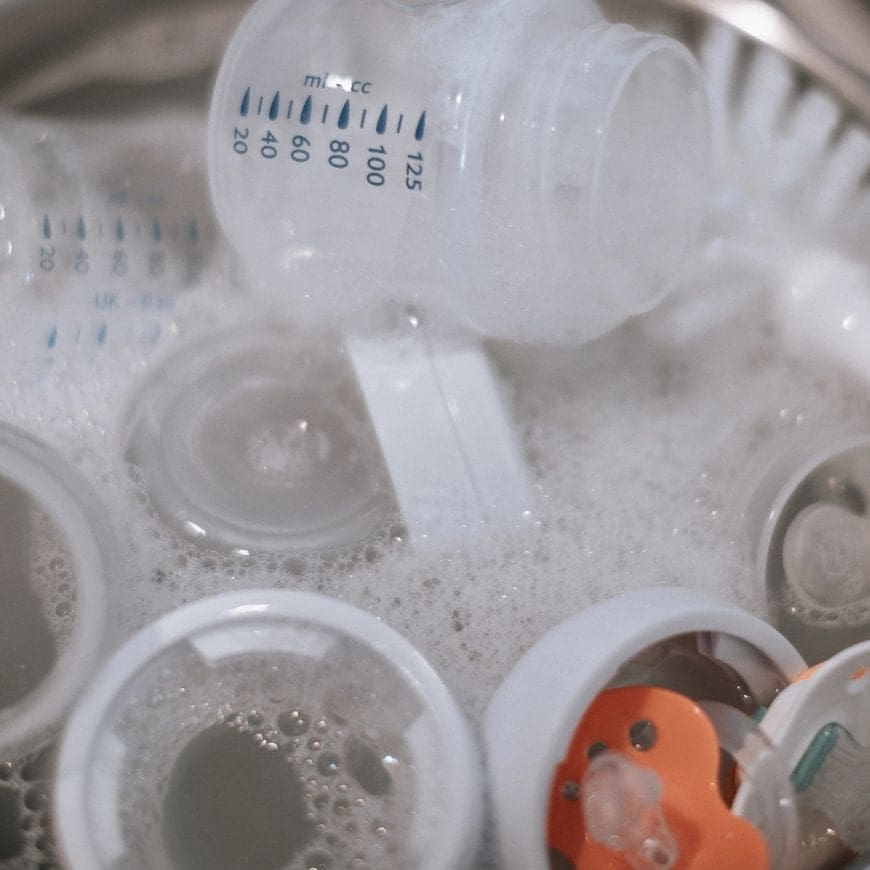
Hand-washing gives you full control. You take every piece apart, scrub with a bottle brush, rinse until the water runs clear, and air-dry on a clean rack. It works in any kitchen, hotel room, or relative’s house. It is the method every parent should know, even if you mostly automate later.
A dishwasher is often better than hand-washing when bottles and teats are dishwasher-safe, small parts are secured in a basket, and you run a hot programme—ideally a baby-only load or careful top-rack separation from heavily soiled cookware. You save scrub time and may combine cleaning with sanitising in one cycle.
Hand-washing wins for “hand wash only” parts, a single bottle needed in ten minutes, or homes without a dishwasher—common in flats and rented accommodation across the UK.
Most families end up mixing methods: hand-washing for quick turns, dishwasher or bottle washer when volume spikes.

Bottle Washer vs Dishwasher: Head-to-Head
Cleaning narrow parts
Plates are flat; bottles are not. Milk hides in threads, vent holes, and pump valves. Dishwashers can miss those spots if water cannot reach inside the chamber. Bottle washers spray upward into inverted bottles and often include baskets shaped for teats and flanges—useful when residue keeps surviving a normal dishwasher cycle.
Sterilising and drying
Not every dishwasher programme reaches the temperatures parents assume when they say “sterilise.” Sanitise settings help, but they vary by model. Many bottle washers advertise integrated steam sterilisation plus forced-air drying—closer to the all-in-one promise of an electric steriliser, without assembling a steaming tray on the worktop.
Cross-contamination and smells
Mixing baby bottles with curry-night pans or garlicky roasting tins can leave odours on silicone teats. Some babies refuse a feed if a teat smells “wrong.” A bottle washer runs a baby-only cycle in a closed chamber. If your dishwasher always holds mixed family loads, a separate machine—or a strict baby-only top-rack habit—reduces the ick factor.
Timing and daily rhythm
Dishwasher cycles often run 90 minutes to three hours. That suits overnight batching but not “I need four bottles before the next cluster feed.” Bottle washers commonly finish a full wash-sterilise-dry cycle in under an hour and sit ready on the counter between feeds—helpful when you pump every few hours.
Space, cost, and running expenses
If you already own a dishwasher, there is no extra purchase—only detergent, electricity, and the bottle basket. Bottle washers need counter space, an upfront price, and usually dedicated detergent tablets. Whether that trade-off feels fair depends on daily volume: two formula bottles versus exclusive pumping with eight flange washes a day are different maths.
Do I Really Need a Bottle Washer if I Have a Dishwasher?
No—you do not need one. Plenty of families manage with a dishwasher sanitise cycle, hand-washing, or a classic electric steriliser and never buy a bottle washer.
A bottle washer starts to make sense when:
- You pump and wash flanges, valves, and bottles multiple times daily
- Your dishwasher lacks a reliable hot programme or cannot fit your bottle setup
- You rent and have no dishwasher—or a shared kitchen with limited access
- Mixed loads leave greasy film or smells on teats
- Boiling or sterilising after every wash is the step that breaks you
If you formula-feed a couple of times a day, your dishwasher copes, and sterilising twice daily is manageable, you may be perfectly fine without another appliance.
Is a Bottle Washer Really Necessary?
Necessary? No. Useful for some households? Yes.
Health guidance focuses on cleaning feeding items properly after every use—and extra sterilising for very young, premature, or medically vulnerable babies—not on owning a particular machine. A bottle washer is a convenience tool, a bit like a bottle warmer: not on any official “must-have” list, but potentially life-changing if it solves your specific bottleneck.
Combo-feeding, exclusive pumping, or washing large batches of gear daily are the scenarios where automation earns its keep. Mostly breastfeeding with an occasional bottle? Your brush and dishwasher may be enough.

Are Bottle Washers Worth the Money?
They can be—if you will use one daily for months during the intensive newborn and early pumping phase.
Compare the purchase price and tablet refills against the time you spend scrubbing, sterilising, and drying manually. Factor in pump parts if you express at work. A machine that reliably returns clean, dry bottles while you hold the baby may feel worth it; one that becomes a shelf for mail after week three is not.
Before buying, check capacity per cycle, whether your pump parts fit, cycle length, drying quality, descaling needs, and ongoing detergent cost. Read your bottle and pump manuals first—if half your kit is hand-wash only, a bottle washer only handles part of the pile.
What to Look for in an Automatic Bottle Washer
If you are leaning toward a dedicated unit after weighing bottle washer vs dishwasher options, compare practical basics rather than marketing claims.
A good automatic bottle washer holds several bottles and teats at once, includes separate zones or baskets for small pump parts, and completes wash, steam sterilisation, and drying in one programme without you assembling a separate steriliser tray. Look for clear compatibility charts for bottle brands and flange sizes, a footprint that fits your worktop near a plug, and straightforward descaling instructions—limescale builds quickly in hard-water areas of the UK.
Some models offer short sealed storage after the cycle ends; others simply deliver dry parts ready to use. Match capacity to your real daily volume: parents washing two bottles need different specs from exclusive pumpers. Run a trial cycle before you depend on it for every feed, and keep replacing worn teats and valves on schedule—no appliance fixes cracked silicone.
When Hand-Washing Still Belongs in Your Routine
Even devoted bottle-washer users should keep a brush and basin. Travel, power cuts, parts marked “hand wash only,” and the valve you want to inspect up close all happen.
Hand-washing after every feed remains a core skill. Machines are shortcuts, not substitutes for knowing what clean looks like: no milk film, no soap residue, fully dry before reassembly and storage.
FAQ
Do I really need a bottle washer if I have a dishwasher?
No. A dishwasher with a hot or sanitise programme plus proper bottle baskets works well for many families. A bottle washer is optional—most helpful for high-volume pumping, unreliable dishwashers, or mixed-load hygiene worries.
Is it better to wash bottles by hand or dishwasher?
Hand-washing offers control and works anywhere. Dishwashers save time when bottles are dishwasher-safe and loaded carefully on a hot programme. Many parents use both depending on the day and how many items need cleaning.
Is a bottle washer really necessary?
Not for everyone. It is a convenience appliance for parents who wash large amounts of feeding gear daily and want wash-sterilise-dry in one enclosed step without a separate steriliser.
Are bottle washers worth the money?
They can be during months of frequent bottle and pump use. Weigh upfront cost, counter space, and tablet refills against the time you spend at the sink and hob now. If your dishwasher routine already works and volume is low, you may skip it entirely.
The bottle washer vs dishwasher debate does not have one universal winner—only the setup that keeps bottles hygienic and leaves you a little less worn out. Wash thoroughly, dry completely, sterilise when your baby’s age and health call for it, and choose the tool you will actually use every day. That is what counts.