

The family health admin nobody warns you about is an ADVERTISEMENT FEATURE WITH BIOJRNL
There is plenty of parenting admin we know to expect. Like school forms. Permission slips and remembering which day everyone needs their PE kit.
On top of all that, there is the family health admin. The appointment letters, medicine names and follow-up dates. Remembering when that cough started, which cream helped and what the doctor said while your child was asking whether you could go home yet.

It is a lot to keep in your head alongside everything else.
And if you have ever left an appointment and promptly forgotten half of what you were told, you are certainly not alone. A 2003 review by Roy Kessels in the Journal of the Royal Society of Medicine reported that between 40 and 80 per cent of medical information given by healthcare practitioners is forgotten immediately. Of what you do remember, almost half may be incorrect.
Those figures sound shocking. But picture an appointment with several instructions to remember, a follow-up to book and a child who urgently needs a snack, and they start to feel rather understandable.
Who remembers it all in your house?
In most families, mum becomes the unofficial keeper of the health information.
They know the allergies, remember the appointments and can usually find the vaccination letter. Although “somewhere safe” can occasionally turn out to be a little too safe.
The trouble is, the information rarely lives in one place. There is a bit in the NHS App, a letter in the kitchen drawer, a photograph on a phone and something useful buried in a family message thread.
Then someone asks, “Did that start before or after the medicine changed?” and suddenly you need an actual date.
Start small and keep it simple
You do not need to document every sniffle or grazed knee. You do not need another enormous job on your list.
Start with the things you might need to remember later:
- When a symptom began.
- When a medicine or dose changed.
- What happened after a reaction.
- What you were told at an appointment.
- What you want to ask next time.
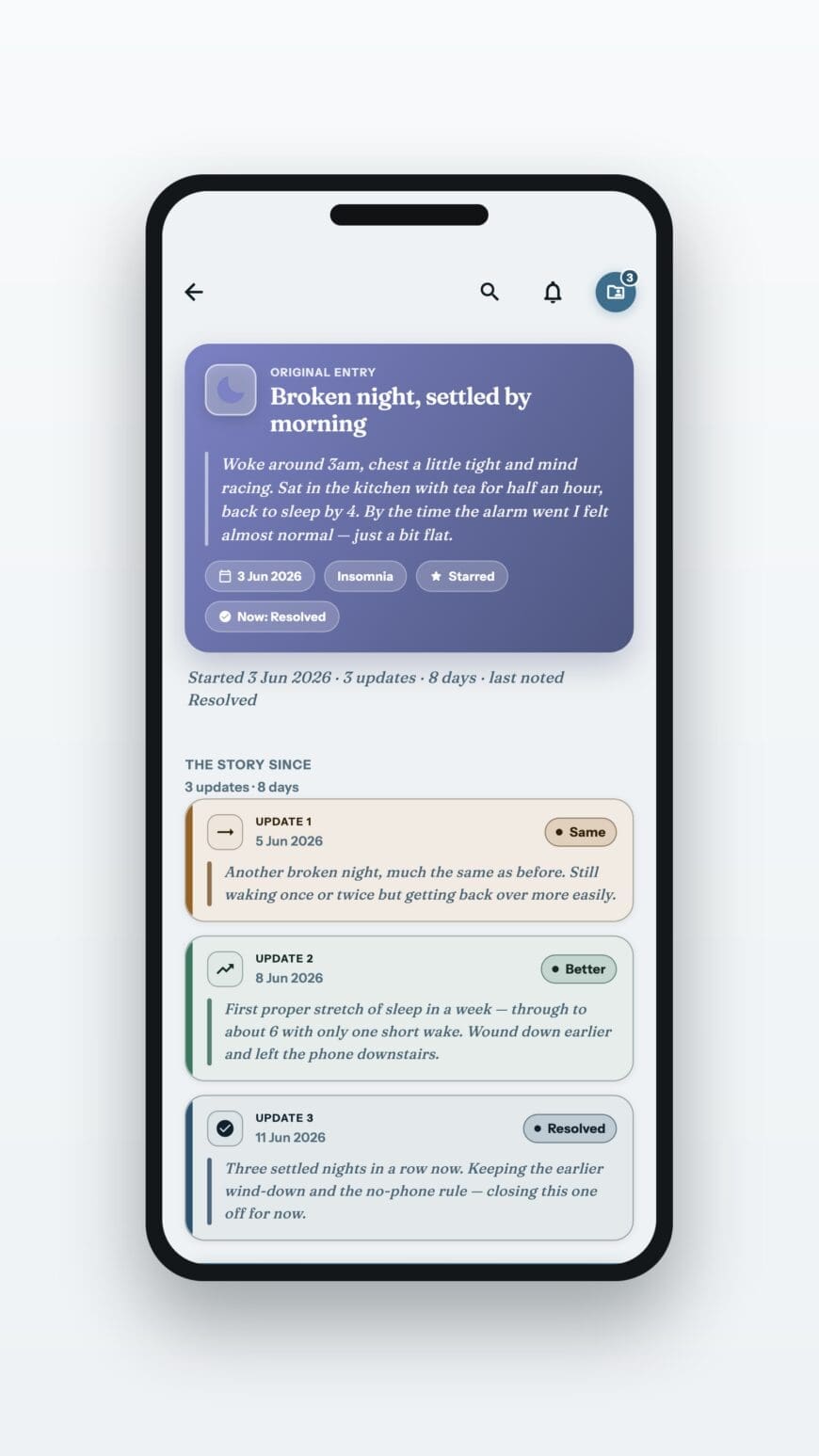
Plain words are absolutely fine. If the doctor says to book another appointment in six weeks, write that down with the date. There is no need to make your notes sound like a medical textbook.
Dates make a real difference. “A few months ago” feels perfectly reasonable until you are trying to work out whether something happened before Christmas or after a change in treatment.
Write down the proper name of a medicine, too. “The one in the blue box” is only helpful until the packaging changes or a second medication in a blue box is introduced! A quick photograph of the label can save a lot of head-scratching.

The change parents might not see coming
Online access to your child’s GP record can change as they get older, which may come as a surprise if you have been using it to help organise their care.
The NHS guidance for family and carer access says most surgeries have an automatic cutoff between the ages of 11 and 14 to protect an older child’s confidentiality. Access usually ends at 16. In some cases, it can be restored with the child’s consent.
Their medical record has not disappeared. It stays with the surgery, and parents can still speak to the practice about managing their child’s care. It’s the convenient online view that may change.
Keeping your own everyday notes can help here. The GP record will not necessarily include that the cough began on the first night of your holiday, or that your child stopped using a cream because it stung.
Those little details can be useful when you are trying to explain what has been happening between appointments.
When you are helping another adult, too
For some of us, the remembering stretches beyond the children. You might also be helping a parent, partner or another relative with their appointments and medicines.
The NHS offers online family and carer access for adults. If you are both registered at the same surgery, you can use the NHS App or NHS website. If you are registered at different surgeries, the surgery setting up access can provide login details for another app or website.
Access is not automatic. The surgery decides what is appropriate and may refuse if it believes access would not be in the person’s best interests.
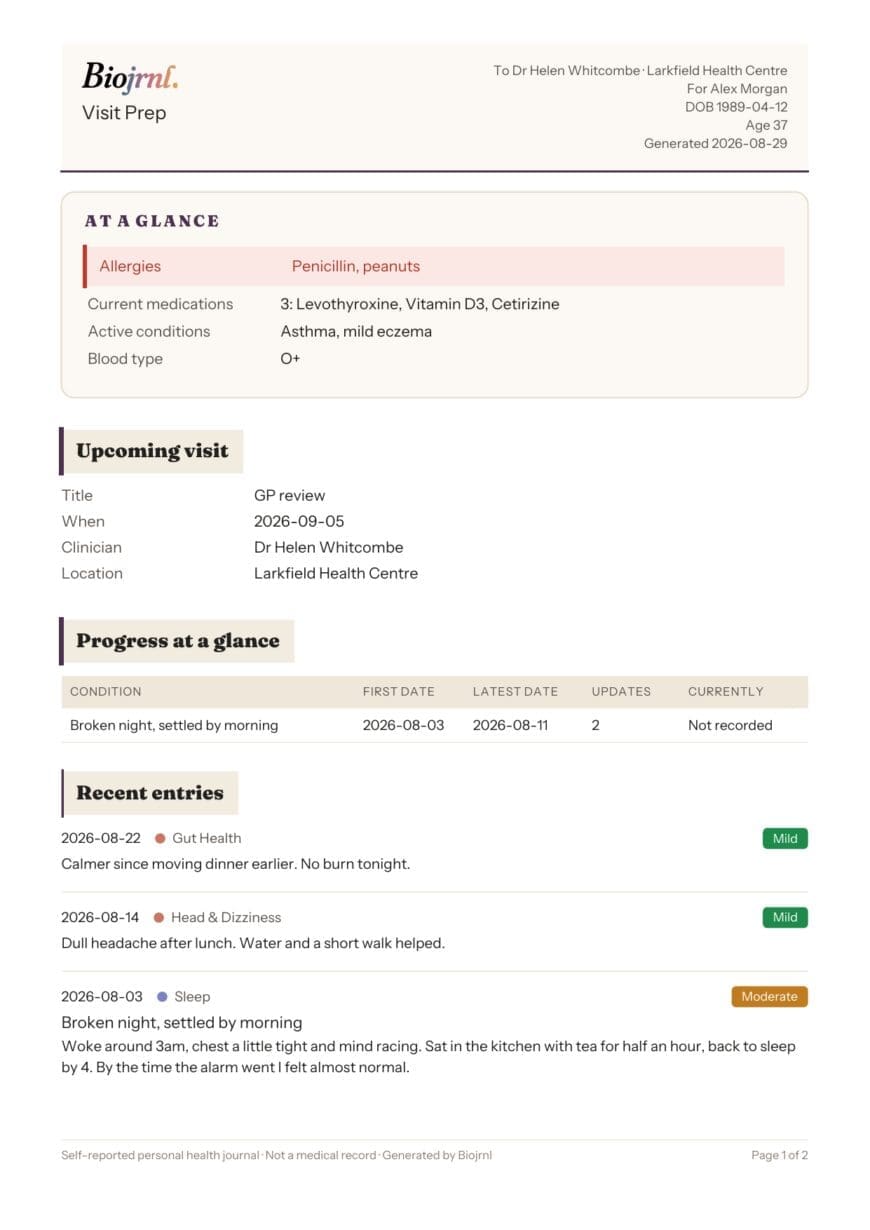
Even when access is arranged, there are still everyday details to keep track of. Whether a tablet was taken. What your relative noticed after a dose changed. What they need to bring to their next hospital appointment.
A short, dated note gives everyone something more useful to work from than, “I’m sure Mum mentioned it last week.”
Make it easy enough to use on a busy day
The best system is one you can actually keep up with.
That might be a notebook or a folder on your phone. The important thing is having the information together, dated and easy to find when you need it. Ideally while standing in a pharmacy queue with about thirty seconds to spare.
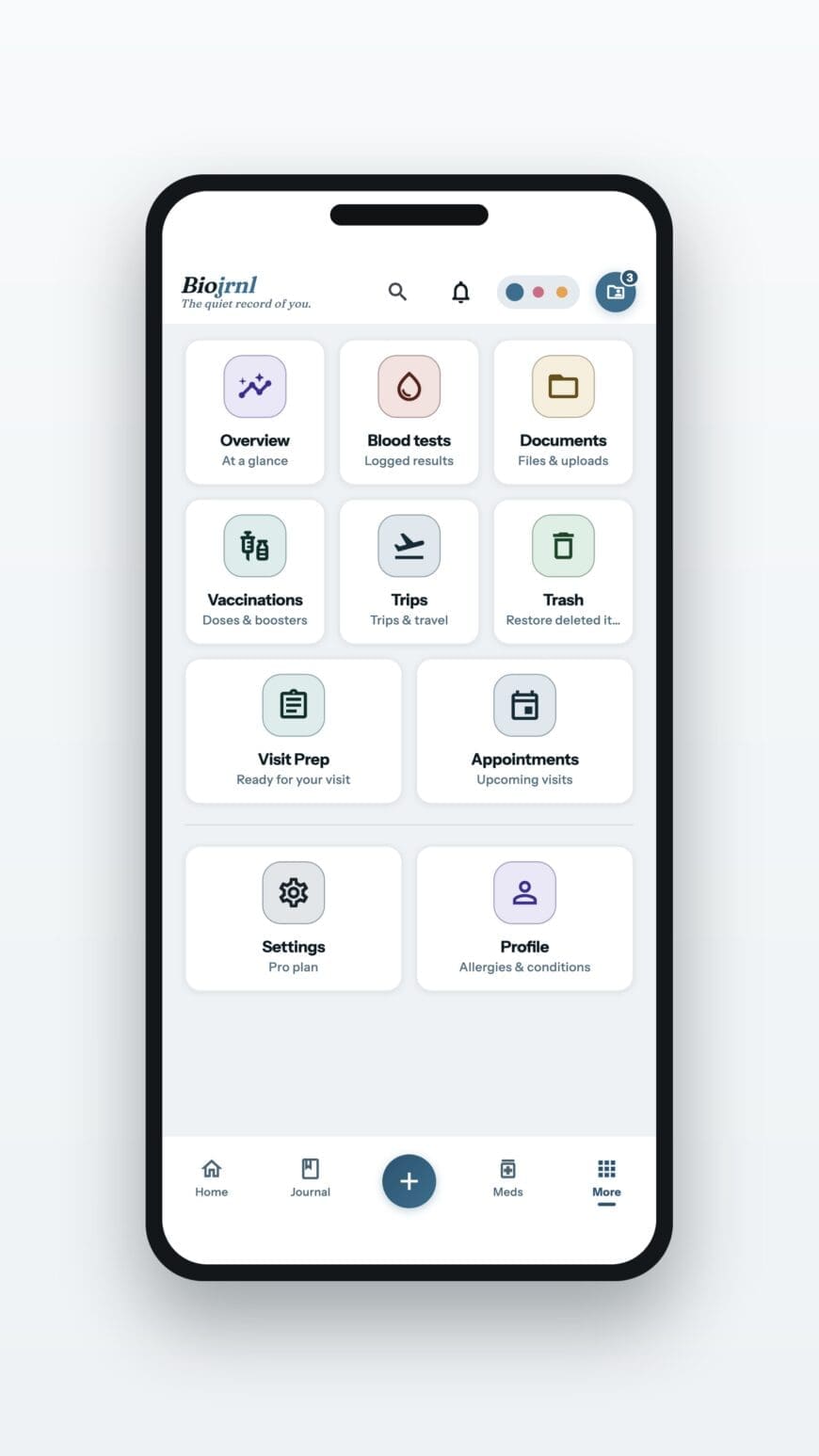
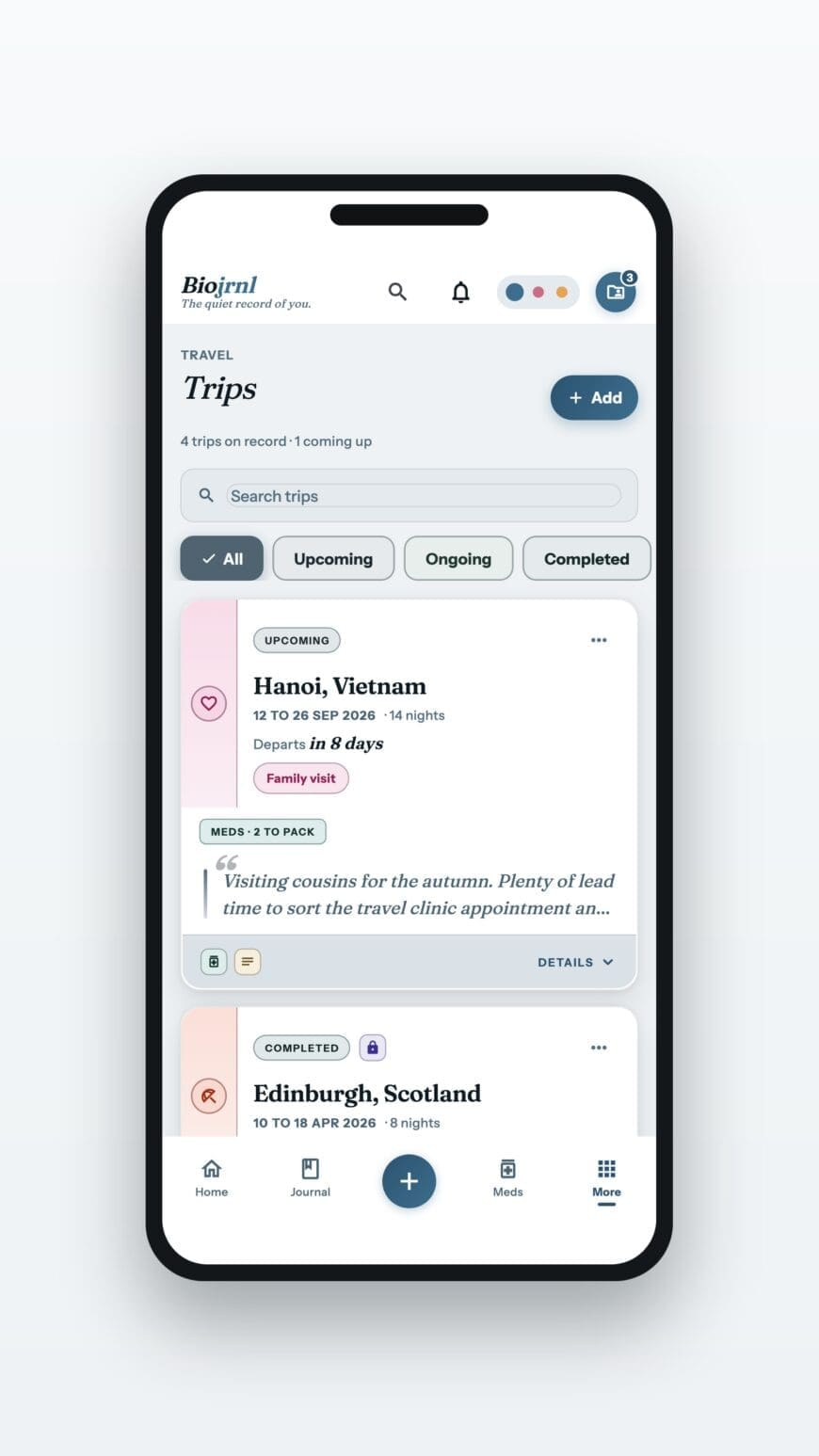
Biojrnl offers a private place to keep these records. It is a personal health journal where you can write things down in your own words and keep medicines, appointments, vaccinations, test results and documents together.
It records the information you enter. It does not diagnose, interpret results or tell you which treatment to choose.
Your journal is kept in an encrypted store on your phone. If you turn on backup or share a record, it is also stored in your Biojrnl account on servers in the EU, with encryption while the information travels and while it is stored. No AI reads your entries, there are no adverts and Biojrnl does not sell your information.
The Family and Care plans also include separate profiles for people you look after. If a relative needs certain information for a short time, you can create a guest view and choose which sections they can see and for how long.
Someone invited to manage a profile alongside you has broader access, intended for a person who shares the caring role.

One less thing to carry in your head
Family life already comes with enough forms, lists and things to remember. This does not need to become another complicated task to add to the already large mental load.
A few lines after an appointment. A date beside a medicine change. A question written down before you forget it.
Small notes can make it easier to find the details when somebody asks what happened or when something changed. And that is one less thing to try to remember while you are doing everything else.
You can learn more about Biojrnl and check current app availability at biojrnl.com.
Biojrnl is a personal journal for your own records. It does not provide medical advice, diagnosis or treatment. If you are worried about a symptom, medicine or reaction, speak to a qualified healthcare professional.