

A rescue dog can be a brilliant fit for a family with young children, provided the dog has been assessed around kids, the adults are realistic about the first three months, and everyone agrees the house rules before the dog walks through the door. Most UK rescues will rehome to families with children. The real question is which dog, and whether now is the right time.
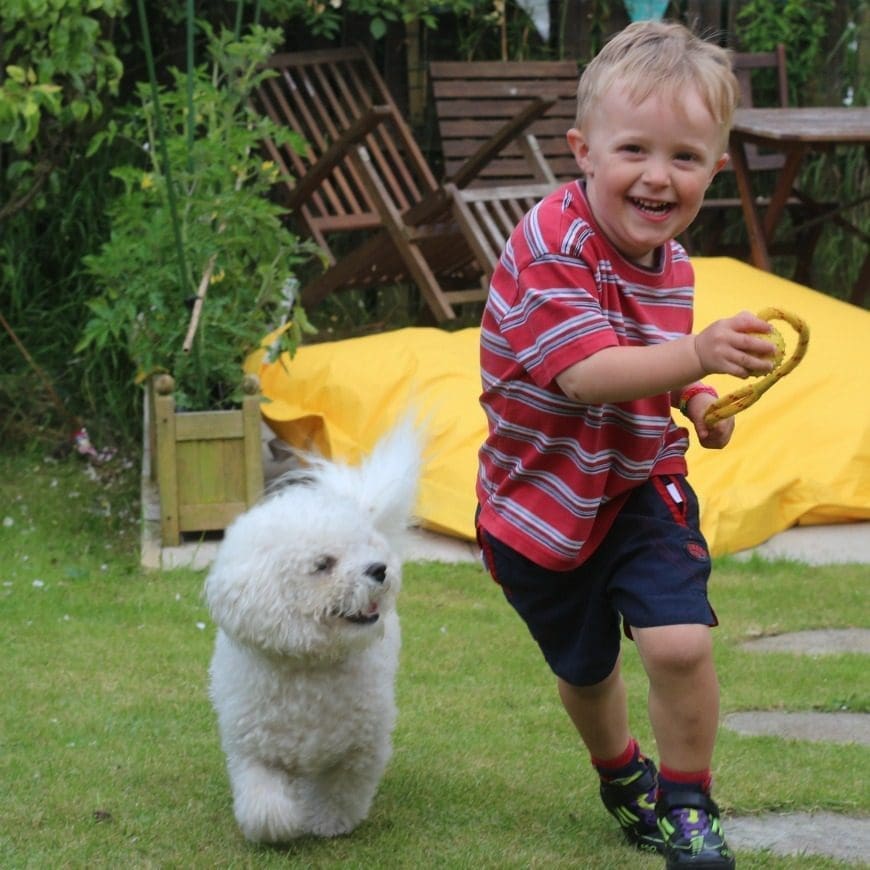
Rescue centres across the UK are full of dogs who lived happily with children before their owners’ circumstances changed. But a rescue dog is not a puppy with the hard bit skipped, and the honest conversation needs to happen before anyone falls for a photo online.
These are the questions to answer as a family first.
Is a rescue dog a good idea with young children?
Rescue dogs suit families with young children when the dog is an adult with a known history around kids, the rescue has assessed it in a home setting, and the youngest child is old enough to follow simple rules. Toddlers and dogs need constant supervision, whatever the dog’s background.
Adult rescue dogs have a settled personality. What you meet is broadly what you get, which is more than can be said for an eight-week-old puppy who could turn out nervous, mouthy or enormous.
The flip side is that a rescue dog arrives with habits you didn’t create. A dog who has never lived with a two-year-old doesn’t know that a wobbling toddler holding a biscuit is neither a threat nor a target.
So the answer is yes, for the right dog. Not for any dog.
Will a UK rescue rehome a dog to a family with young kids?
Most UK rescues, including the RSPCA, Dogs Trust and Blue Cross, rehome dogs to families with children. Each dog is matched individually, so a rescue will say a particular dog is suitable for children over 5, over 8, or for adult-only homes, based on how that dog has behaved.
That per-dog rule catches a lot of families out. You’ll see “no children under 8” on one profile and “lived happily with toddlers” on the next, from the same centre. Smaller independent rescues sometimes set a blanket minimum age; the larger charities assess dog by dog.
The RSPCA explains that its staff weigh up the ages of children, their experience with dogs and the temperament of the individual dog before agreeing an adoption. Expect an application form, a meeting at the centre (often two or three), and a home visit or video check before the dog comes home. From first enquiry to collection, 2 to 4 weeks is common.
Be honest on the form about your children’s ages. A rescue that turns you down for one dog is doing its job. It usually has another in mind.

What should we ask about the dog’s history and health?
Ask the rescue for the dog’s known history, its behaviour assessment, and its full veterinary record: vaccination dates, microchip number, neutering status, flea and worm treatment, and any condition a vet has treated, investigated or noted. Get that record in writing before adoption day, not after.
Most reputable rescues cover the basics as part of the adoption fee. The RSPCA fee, for example, includes microchipping, vaccinations, neutering where possible, flea and worm treatment and veterinary checks. Adoption fees typically run from around £150 to £350 for a dog, depending on the centre and the dog’s age.
The health record matters more than most families realise, and here’s why.
Any illness, injury or symptom noted in the dog’s vet records before your insurance policy starts counts as a pre-existing condition, and most UK insurers exclude it from cover, sometimes along with related conditions elsewhere on the body. Reading up on how insurers treat a dog’s pre-existing health conditions before you commit tells you what you’d be paying for yourself.
A rescue Staffie with a skin allergy on file, or a Lurcher with a healed fracture, is still a wonderful family dog. You just go in knowing the itchy ears or the stiff leg are likely to be your bill rather than the insurer’s. Ask the rescue outright: “Is there anything on this dog’s vet notes that an insurer would treat as pre-existing?” A good centre will tell you.
Ask about the gaps too. A stray with no history isn’t a red flag in itself, but it does mean the rescue’s own assessment is all you have to go on. Find out whether the dog has spent time in a foster home with children.
How long does a rescue dog take to settle with a family?
A rescue dog typically takes around three months to feel at home, following the pattern rescuers call the 3-3-3 rule: three days to decompress, three weeks to learn the routine, three months to relax fully. The dog you see in week one is not the dog you’ll have at month three.
Those first three days are the hardest with children. The dog is overwhelmed, the kids are beside themselves with excitement, and both need protecting from each other. A crate or a stair-gated room where the dog can retreat and the children cannot follow is the most useful thing you can set up before collection day.
By three weeks the dog knows when breakfast happens and who does the walks. This is also when behaviour you never saw at the centre tends to appear: guarding the sofa, barking at the postie, chewing school shoes. That’s normal. It means the dog feels safe enough to be itself.
By three months, most families say the dog has always been there. Plan the adoption for a quiet stretch of the calendar. The start of the summer holidays gives you six weeks of adults at home. The week before Christmas does not.
Who in the family is actually going to do the work?
The adults are. Children can help with feeding, training games and gentle grooming, but a rescue dog’s walks, vet visits, training and supervision belong to the grown-ups, every day, for the next 10 to 15 years. If that sounds heavy, that is the right reaction to have now rather than later.
Sit down together and work out a normal Tuesday. Who walks the dog before school? Who is home at lunchtime, or paying a dog walker around £12 to £18 a visit? Who has the dog when you go abroad?
Then work out the money. Food, insurance, annual boosters, flea and worm treatment, kennels for holidays: a medium-sized dog can cost around £80 to £150 a month once everything is counted, before any unexpected vet bills. If you want the long view, there is a full financial breakdown of what a dog costs over its lifetime in the UK that adds it all up year by year.
What are the signs a rescue dog isn’t coping with the kids?
A rescue dog that is struggling with children will show it before it bites. The warning signs are turning the head away, licking lips when no food is around, yawning, showing the whites of the eyes, going stiff, and moving away from the child again and again. Growling is a late warning, and a useful one.
Teach the children the dog’s “no” signals as seriously as you teach road safety. A dog that walks away from a child is allowed to go. A dog in its bed or crate is off limits. Nobody hugs the dog, climbs on the dog, or touches the dog while it eats. Those few rules prevent most bites at home.
Then know when to call for help. Most rescues offer post-adoption behaviour support, often free, and would far rather take a call at week two than a returned dog at month four. If the dog has growled at a child more than once, or guards food or toys from the children, ring the rescue that day.
Returning a dog isn’t failure. It’s a bad match, corrected.
So, should we do it?
Get a rescue dog with young children if the rescue has matched you with a dog assessed around kids, you have read its vet history and understood what it means for your wallet, the adults have agreed who does what, and you can give the dog three quiet months. If any of those four is a maybe, wait a year.
A family that waits until the youngest is at school, then takes the right dog, tends to be the family still walking that dog a decade later.
The dog you want is out there. Make sure your family is ready for it first.