
There is something about monkey bars that pulls children in. Watch a four-year-old reach up, grab the first rung and hang there grinning like they have conquered Everest, and the appeal makes complete sense. Plenty of kids elbow past the slide at the park just to get to the climbing frame. And one question follows parents around the playground on repeat: how young is too young?
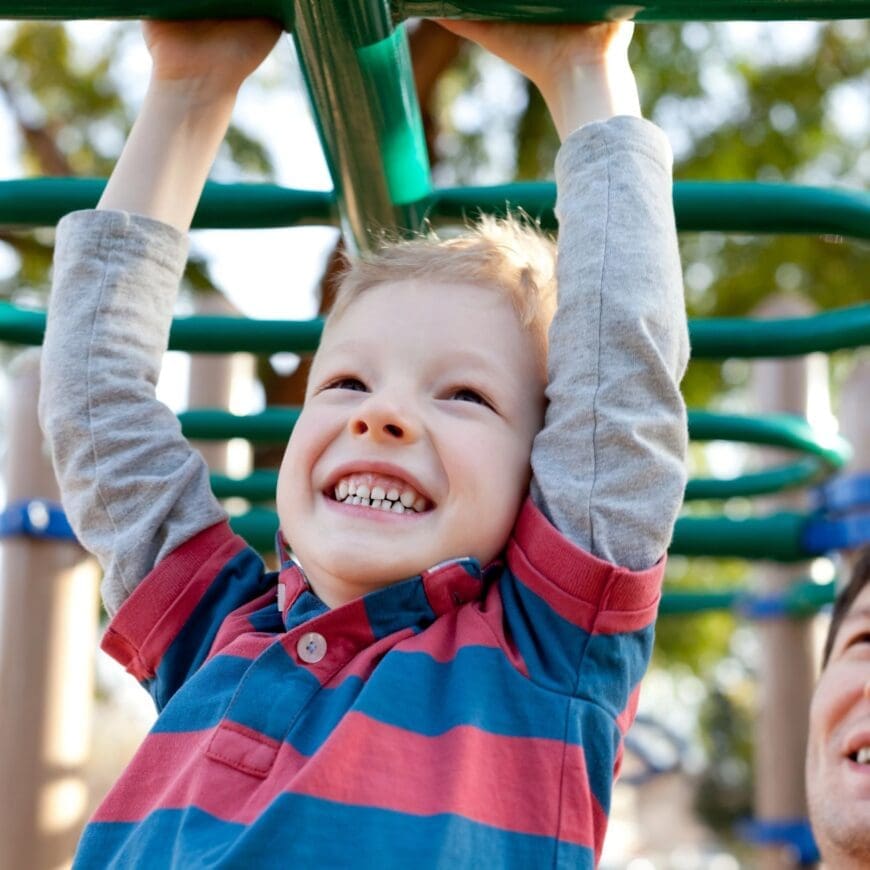
The honest answer leans less on a birthday and more on what a child can already do with their own body.
The short version for tired parents
Children can begin gentle hanging from around three, manage more from four or five, and often swing rung to rung by six or seven, give or take. Age is a rough guide; what a child can do with their body is the real signal. Give them low bars, soft ground, a bit of supervision and plenty of repetition, and the rest tends to sort itself out.
Years on, plenty of kids still race to the bars first. Some things about childhood do not change, and the sight of a child hanging upside down, hair everywhere, asking someone to watch “just one more go” is one of the better ones.
There isn’t a magic number
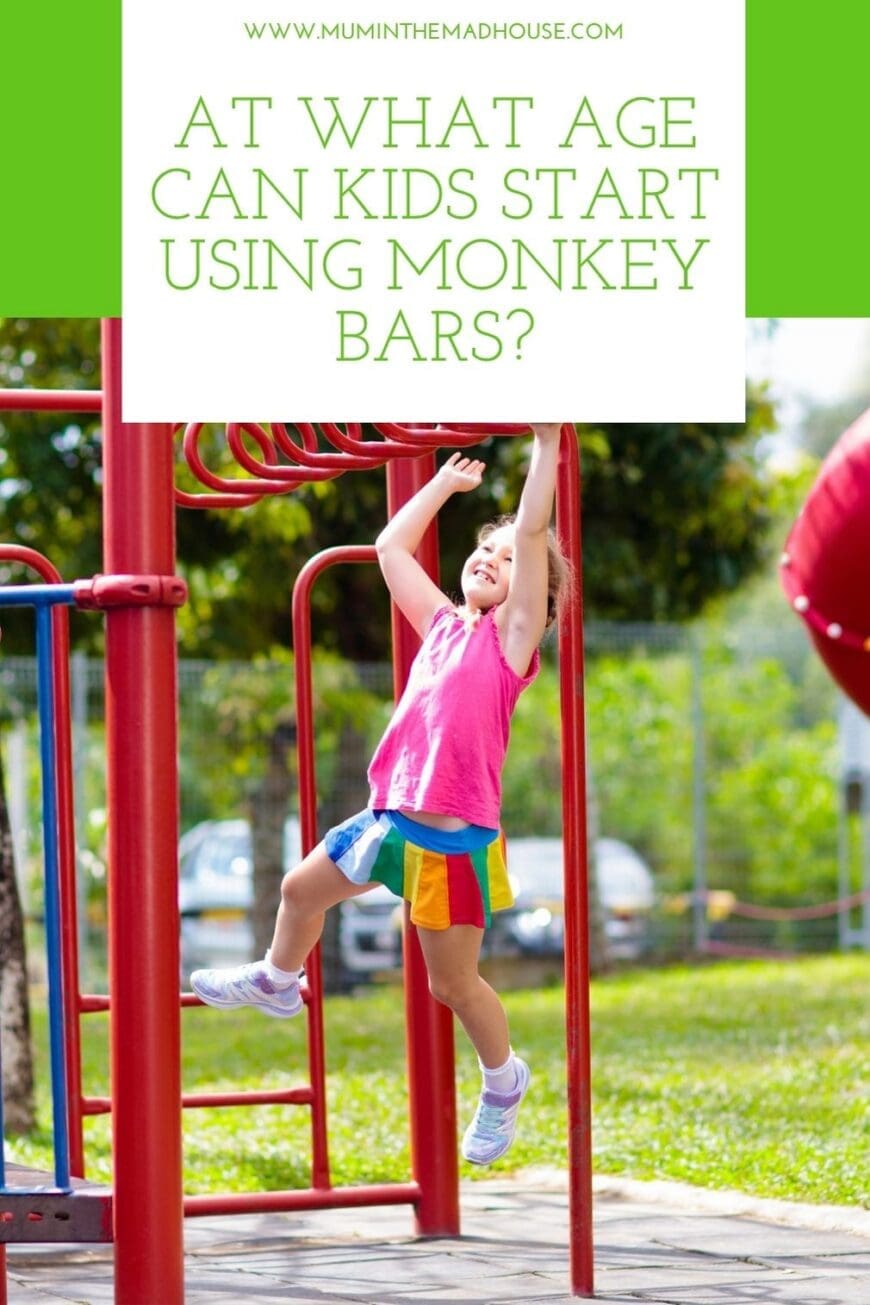
Most children show real interest in hanging and swinging from around three, though plenty start grabbing low bars earlier. By four or five, many can support their own weight for a few seconds. Full rung-to-rung swinging, the proper “brachiation” that looks so effortless when older kids do it, tends to land somewhere between six and seven for a lot of children. Some get there sooner, some later, and neither says anything worrying about a child.
What matters more than age is grip strength and the confidence to let go with one hand. A child who can hang comfortably for ten seconds is usually ready to try reaching for the next bar.
Building up to it at home
Park visits are brilliant, but they are also occasional, and skills like these come from repetition. Having something in the garden changes the maths entirely. A child who can wander out after breakfast and have a casual go, with no queue and no audience, tends to progress faster because they simply get more attempts.
This is where a home set earns its keep. A backyard monkey bars set lets the height be matched to the child rather than the other way round, and a modular build means a family can start small and add to it as the kids grow. That low-and-slow approach takes the pressure off a cautious child while still giving a confident one something to show off on.
A few things worth checking before any equipment goes in:
- A soft landing surface underneath, whether that is rubber matting or grass kept thick and springy
- Bar spacing and height suited to the age of the children using it
- Regular checks of bolts and joints, because outdoor equipment loosens over a season
Why the wobbly early days are worth it
Hanging and swinging look like pure fun, and they are, but there is a fair bit of quiet development going on underneath. Gripping a bar fires up the small muscles in the hands and forearms, the same ones children later lean on for holding a pencil and doing up buttons. Swinging from bar to bar asks the brain to coordinate both sides of the body in turn, which feeds into all sorts of everyday coordination.
Then there is the part many parents value most: the problem-solving. A child stuck halfway across has to work out where to put their weight and when to reach for the next bar. They fall, they dust themselves off, they try again. Learning that a wobble is not a disaster is one of the sneaky wins of having bars at home.
Safety without the wrapping-in-cotton-wool
Caution and freedom can live together. The aim is sensible boundaries, not bubble-wrap.
Supervision counts most in the early weeks while a child learns their own limits. After that, a quick set of house rules does a lot of work. Keeping it short helps: one child on the bars at a time, and shoes that grip rather than flip-flops that slide. Teaching a child to land properly, knees soft, before anything fancy feels backwards at the time but pays off the first time someone slips.
Chalk, or even slightly damp hands wiped on shorts, helps with grip on humid days. And if a child is frightened, there is no value in pushing. The bars will still be there next week.
When to hang back
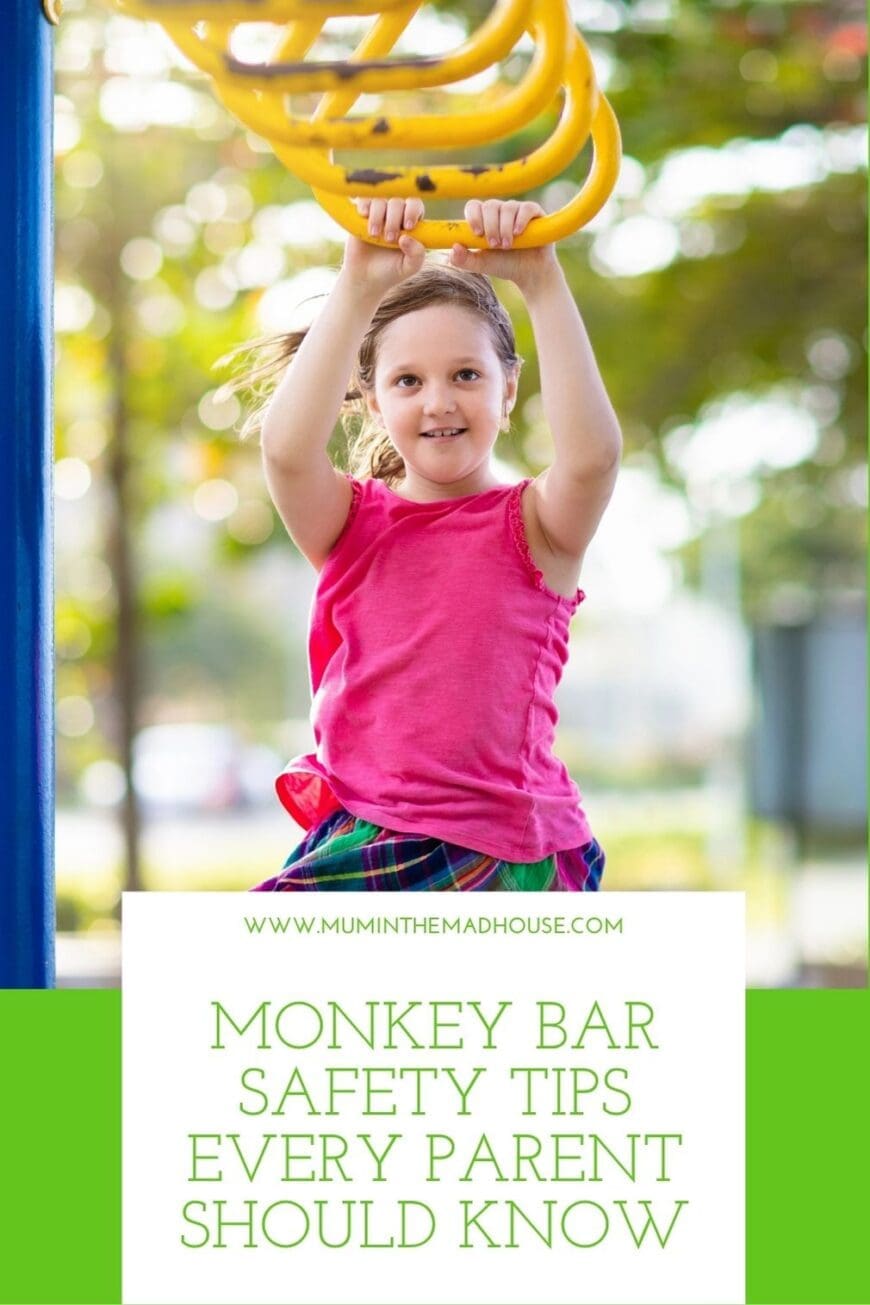
A few situations call for patience rather than encouragement. A child recovering from a wrist or elbow injury needs clearance before swinging. The youngest toddlers who cannot yet hold their own weight are better off with low climbing frames and supported hanging, with an adult taking most of the load. If a child has a condition affecting joints or muscle tone, a quick word with a physiotherapist beats guesswork.
None of that calls for waiting around for a perfect moment. It means matching the challenge to the child in front of you.